Demo Site
Showing posts with label Music: 19th. Century. Show all posts

Tuesday, May 17, 2011

TRAVEL DIARIES: SCHUMANN IN LEIPZIG


SCHUMANN IN LEIPZIG
Travel Diary, May 1-4, 2011

I would like to convey by this medium some of the wet, green, Romanticism that is a pervasively ubiquitous and strong element in the music of Robert Schumann, as also in the landscapes of his city of Leipzig. He was born in Zwickau, to the south of Leipzig, and died in remote Düsseldorf, but most of his greatest works were composed in Leipzig, where he lived his young manhood and met the love of his life, Clara Wieck.

Be sure to view the photographs by clicking on them to expand their size.


"He has made himself a new ideal world in which he moves almost as he wills." (Franz Grillparzer on Schumann)


Portrait of Robert Schumann (1810-1856)


Romantic Leipzig


The Auerwald (Forest of Green Pastures) in Leipzig. Schumann may well have thought, as he walked in the Auerwald, of the words of Psalm 23, which were so important to Luther: “Der Herr ist mein Hirte, mir wird nichts mangeln. Er weidet mich auf einer grünen Aue und führet mich zu frischem Wassern." (Lutherbibel)

“The LORD is my shepherd; I shall not want. He maketh me to lie down in green pastures: he leadeth me beside the still waters.” (Psalm 23, King James Version)


Until the 1920's the many waterways in Leipzig, three rivers meet there, were free for vessels of all kinds: From Auerwald in the south of the city it was possible to make rowing trips right into the city centre.


Schumann, Fantasie, Op. 17, 3rd. movement (1836)


The Fantasie in C, Op. 17, was composed in the summer of 1836 in Leipzig. It is meant to have a “dreamy” (träumerisch) character. The above is only the third movement of the piece.


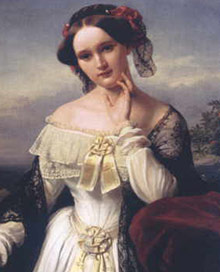
Portrait of Clara Wieck (Wikipedia)


The Schumann House in Leipzig

From 1840 to 1844, the newly-wed Schumanns lived in the house which is now the Clara Schumann School of Music for Children. Its address is now number 18 on Inselstrasse, but in the days of the Schumanns it was 5 Inselstrasse.

Robert-und-Clara-Schumann-Verein-Leipzig-Inselstraße-18 e.V.
Inselstr. 18
04103 Leipzig
Tel.: 0341 - 393 96 20
Fax: 0341 - 393 96 22
E-Mail: info@schumann-verein.de


Home of the Schumanns in Leipzig


Robert and Clara had fought a long and difficult battle to achieve their union. Clara’s father, Friedrich Wieck, a respected professor of piano, voice teacher, piano firm owner, and music reviewer in Leipzig, was stubbornly opposed to any relations between her daughter and the young musician. Schumann asked for Wieck’s consent to a marriage in 1837, and was refused. Despite the opposition, Clara and Robert continued their clandestine relationship, exchanging secret love letters and meeting briefly after her concerts in the city. The friendship matured into a deep and lasting romance, fueled by the strain and frustration of years duration, all of which would forever be heard in the lyrical and Romantic music of Schumann. In 1837, he asked her father's consent to their marriage, but was refused. Wieck ridiculed his daughter's wish to "throw herself away on a penniless composer.”


Photo of mosaic on the Grimmaischestrasse in Leipzig, showing the location of the childhood home of Clara Wieck, where she lived from 1825 and 1835, and where Schumann lived with the family in 1830 and 1831.


After a long and acrimonious legal battle with her father, Clara finally married Schumann on September 12, 1840, at Schönefeld. They finally resolved the battle by waiting until she was of legal age and no longer subject to her father's consent for marriage.


The Leipzig Gewandhaus, yesterday and today.

Since the early nineteenth century, the Leipzig Gewandhaus has been the center of musical performance in this, almost religiously, musical city. Felix Mendelssohn was Kapellmeister, music director, of the Gewandhaus in the 1830's, and Clara Schumann here performed at the premiere of the Schumann Piano Concerto Op. 54 (see below), under the baton of her husband.

The Gewandhaus is the traditional home of the Gewandhausorchester Leipzig. The first building was already erected in 1498 and originally served as armoury. When the first floor started to be used as a trading place for draperies and woolens, the whole building soon became known as 'Gewandhaus', 'cloth hall'. In 1780/1781 the second floor was adapted as a concert hall. The orchestra itself had been founded in 1743 and soon after its first concert at its new location became known as 'Gewandhausorchester'. The old Gewandhaus was partly torn down in 1893–1896 and incorporated into the municipal department store. The second Gewandhaus was built in 1882-1884 after a design by Martin Gropius. The building housed two concert halls; the large hall had a capacity of 1,700 seats, the chamber music hall seated 650. The building was severely damaged by two bomb raids in 1943 and 1944. The ruins were finally torn down in 1968. At first the site was used as a parking lot and in 2002 a new university building was built here. The present (third) Gewandhaus was built in 1977–1981 in Augustusplatz, opposite the new opera house. [ http://www.thomasgraz.net/glass/gl-698.htm ]


Below, the old Gewandhaus, on the Augustus Platz, but around the corner from where the present Gewandhaus is located. This old Gewandhaus is the one existing at the time of Mendelssohn, the Schumanns, Lizt and Wagner, demolished in 1882.


Below, the new Gewandhaus built in the 1880's across from the old opera house, on the Augustus Platz, the Gewandhaus of the Wilhelmine Era, which was destroyed during World War II by Allied bombing raids. On the façade of the building, the words: Res Severa Verum Gaudium (“True joy is a serious thing.”), are from Seneca the younger, Epistolae morales, 23, 4.


Below, the presently new Gewandhaus, built after the Second World War on the spot where the second Gewandhaus was located.


On the Augustus Platz, the fountain (Mende Brunnen) across from the Leipzig Gewandhaus [The Mende-Brunnen was designed in 1893 by Adolph Gnauth; the sculptures were created by Jakob Ungerer. The fountain was unveiled in 1896. The financial means for its construction were bequeathed by land owner Pauline Mende after whom the fountain was named. The fountain was originally set up on Augustusplatz. It was relocated several times but now has been moved back to almost its original location in the Augustusplatz.]


The stage in Schumann's life when he was deeply engaged in setting of Goethe's Faust to music (1844–53) was a critical one for Schumann’s mental and physical health. He spent the first half of 1844 with Clara on tour in Russia. On returning to Germany, he abandoned his editorial work and left Leipzig for Dresden, where he suffered from persistent “nervous prostration.” As soon as he began to work, he was seized with fits of shivering and an apprehension of death, experiencing an abhorrence for high places, for all metal instruments (even keys), and for drugs. Schumann's diaries also state that he suffered perpetually from imagining that he had the note A5 sounding in his ears. It was an anticipation of his final collapse from madness in Düsseldorf, in 1856.


The Weiße Elster, White Elster River, runs through the city of Leipzig


Georg Szell conducts the beginning of Schumann's Second Symphony

Sunday, March 6, 2011

The Romantic virtuoso form: Chamber Music

Mendelssohn, Piano Trio in D Minor

Artur Rubinstein, Piano
Jascha Heifetz, Violin
Grigor Piatigorsky, Cello

The Romantic virtuoso form: Sarah Chang and Felix Mendelssohn

Mendelssohn, Concerto in E Minor
Sarah Chang, Violin
Kurt Masur and the New York Philharmonic

Third Movement Finale


Felix Mendelssohn (1809 – 1847)


Tuesday, November 16, 2010

WAGNER, Siegmund und Sieglinde: Die Walküre


LOVE OVERCOMES CONVENTION:

Wagner's
"Winterstürme" Duet
in the Opera Die Walküre, Act I


Rackham, Siegmund and Sieglinde


Siegmund und Sieglinde:
"Winterstürme" Duet
[with English translation, below]


For Wagner, the hero, Siegfried, had to be born of passionate, but forbidden, love. Everything is broken, and hence forbidden, after the Gold of the Rhine is stolen from the Rhinemaidens and fashioned into Power in the form of a ring. Power in rivalry with Nature leads to the decline of the Gods. This was the quandary, which Wagner tried to pass off as tragedy, resulting from the God Wotan having lied to the Giants. From that moment, all covenants will be broken, all vows, treaties and promises, so that the hero, who is to set everything to right again, can be born to recover the Ring of the Nibelungs.


In the magnificent duet that is the subject of the video below, and which is unfortunately a little truncated at the end, the passion between Sigmund and Sieglinde, the parents of the hero Siegfried, is first expressed, discovered in fact, during the course of the First Act of the opera Die Walküre. Sieglinde is not only married to Sigmund’s host, Hunding, who sleeps in the next room, but she is also Sigmund’s brother. Both the marriage vow and the taboo on incest are broken in this scene. In the course of their duet they have discovered that they are siblings and that they are passionately in love with one another and must flee. But before their final departure Siegmund sings about the Spring, which is the focus of the video below.

As the feelings of love begin to grow within him, Siegmund, after a stormy passage, which is not heard in this recording, begins to sing about springtime: “The storms of Winter have vanished before Spring!” This is a reference to his growing erotic feelings for Sieglinde, but it is also a paean to Nature and a description of his sensual impressions of the change of seasons. Spring is a ‘decoy for Love,’ which arrives along with it. Siegmund pledges to liberate Sieglinde from her bond by way of his love.

“The sister as bride is freed by her brother.
In ruins lies all that kept them apart.
Joyfully the young couple greet one another.
Love and Spring are united.”

She, aware of her own feelings, will respond: “You are the Spring!”

It is one of the most famous, most romantic, and most accomplished duets in all of Wagner’s operas.


Peter Hoffman and Jeanine Altmeyer, Pierre Boulez at Bayreuth, 1976


Die Walküre: Act I - Duet

SIEGMUND

Winterstürme wichen
dem Wonnemond,
in mildem Lichte leuchtet der Lenz;
auf linden Lüften leicht und lieblich,
Wunder webend er sich wiegt;
durch Wald und Auen weht sein Atem,
weit geöffnet lacht sein Aug': -
aus sel'ger Vöglein Sange süß er tönt,
holde Düfte haucht er aus;
seinem warmen Blut entblühen wonnige Blumen,
Keim und Sproß entspringt seiner Kraft.
Mit zarter Waffen Zier bezwingt er die Welt;
Winter und Sturm wichen der starken Wehr:
wohl mußte den tapfern Streichen
die strenge Türe auch weichen,
die trotzig und starr uns trennte von ihm. -
Zu seiner Schwester schwang er sich her;
die Liebe lockte den Lenz:
in unsrem Busen barg sie sich tief;
nun lacht sie selig dem Licht.
Die bräutliche Schwester befreite der Bruder;
zertrümmert liegt, was je sie getrennt:
jauchzend grüßt sich das junge Paar:
vereint sind Liebe und Lenz!


SIEGLINDE
Du bist der Lenz, nach dem ich verlangte
in frostigen Winters Frist.
Dich grüßte mein Herz mit heiligem Grau'n,
als dein Blick zuerst mir erblühte.
Fremdes nur sah ich von je,
freudlos war mir das Nahe.
Als hätt' ich nie es gekannt, war, was immer mir kam.
Doch dich kannt' ich deutlich und klar:
als mein Auge dich sah,
warst du mein Eigen;
was im Busen ich barg, was ich bin,
hell wie der Tag taucht' es mir auf,
o wie tönender Schall schlug's an mein Ohr,
als in frostig öder Fremde
zuerst ich den Freund ersah.


SIEGMUND
O süßeste Wonne! Seligstes Weib!


SIEGLINDE
O laß in Nähe zu dir mich neigen,
daß hell ich schaue den hehren Schein,
der dir aus Aug' und Antlitz bricht
und so süß die Sinne mir zwingt.


SIEGMUND
Im Lenzesmond leuchtest du hell;
hehr umwebt dich das Wellenhaar:
was mich berückt, errat' ich nun leicht,
denn wonnig weidet mein Blick.


SIEGLINDE
Wie dir die Stirn so offen steht,
der Adern Geäst in den Schläfen sich schlingt!
Mir zagt es vor der Wonne, die mich entzückt!
Ein Wunder will mich gemahnen:
den heut' zuerst ich erschaut,
mein Auge sah dich schon!


SIEGMUND
Ein Minnetraum gemahnt auch mich:
in heißem Sehnen sah ich dich schon!


SIEGLINDE
Im Bach erblickt' ich mein eigen Bild
und jetzt gewahr' ich es wieder:
wie einst dem Teich es enttaucht,
bietest mein Bild mir nun du!


SIEGMUND
Du bist das Bild,
das ich in mir barg.


SIEGLINDE
O still! Laß mich der Stimme lauschen:
mich dünkt, ihren Klang
hört' ich als Kind.
Doch nein! Ich hörte sie neulich,
als meiner Stimme Schall
mir widerhallte der Wald.


SIEGMUND
O lieblichste Laute,
denen ich lausche!


SIEGLINDE
Deines Auges Glut erglänzte mir schon:
so blickte der Greis grüßend auf mich,
als der Traurigen Trost er gab.
An dem Blick erkannt' ihn sein Kind -
schon wollt' ich beim Namen ihn nennen!
Wehwalt heißt du fürwahr?


SIEGMUND
Nicht heiß' ich so, seit du mich liebst:
nun walt' ich der hehrsten Wonnen!


SIEGLINDE
Und Friedmund darfst du
froh dich nicht nennen?


SIEGMUND
Nenne mich du, wie du liebst, daß ich heiße:
den Namen nehm' ich von dir!


Makert, Siegmund et Sieglinde dans la cabane de Hunding, 1883


Die Walküre: Act I - Duet

SIEGMUND
Wintry storms have vanished
before Maytime;
in a gentle light springtime shines out.
On balmy breezes light and lovely
it weaves miracles as it wafts.
Through woods and meadows its breath blows,
wide open its eyes are smiling.
Lovely birdsong sweetly proclaims it.
Blissful scents exhale its presence.
Marvellous flowers sprout from its hot blood,
buds and shoots grow from its strength.
With an armoury of delicate charm it conquers the world.
Winter and storms vanish before their stout defence.
At these bold blows, of course,
the stout doors yielded too,
for stubbornn and hard they kept us from the spring.
To its sister here it flew.
Love decoyed the spring.
In our hearts it was hidden deep;
now it smiles joyfully at the light.
The sister as bride is freed by her brother.
In ruins lies all that kept them apart.
Joyfully the young couple greet one another.
Love and Spring are united.


SIEGLINDE
You are the spring for which I longed
in the frosty winter time.
My heart greeted you with holy terror
when first your glance lighted upon me.
I had only ever seen strangers;
my surroundings were friendless.
As if I had never known it
was everything that befell me.
But you I recognized plain and clear;
when my eyes saw you, you belonged to me.
What I hid in my heart, what I am,
bright as day it came to me,
like a resounding echo it fell upon my ear,
when in frosty lonely strangeness
I saw my friend.


SIEGMUND
O sweetest bliss, most blessed woman!


SIEGLINDE
O let me come close up to you
and clearly see the noble light
that shines in your eyes and from your face,
and sweetly grips my senses.


SIEGMUND
In the spring moonlight you shine brightly,
nobly haloed with waving hair:
what enchanted me I can easily guess,
for rapturously my eyes gloat on you.


SIEGLINDE
Look how your forehead broadens out,
and the network of veins winds into your temples.
I tremble with the delight that enchants me.
It brings something strange to my mind:
though I first saw you today,
I've set eyes on you before.


SIEGMUND
A dream of love comes to my mind as well:
burning with longing I have seen you before.


SIEGLINDE
In the stream I've seen my own likeness;
and now I see it again.
As once it appeared in the water
so now you show me my likeness.


SIEGMUND
You are the likeness that I hid in myself.


SIEGLINDE
Hush! let me listen to your voice.
Its sound, I fancy, I heard as a child,
but no! I heard it recently-
when the echo of my voice sounded back through the forest.


SIEGMUND
O loveliest sound for me to hear!


SIEGLINDE
The fire in your eyes has blazed at me before.
So the old man gazed at me in greeting
when to my sadness he brought comfort.
By his look his child recognized him,
I even wanted to call him by name.
Are you really called Woeful?


SIEGMUND
I am not called that since you love me:
Now I am full of purest rapture.


SIEGLINDE
And "Peaceful" may you not, being happy, be named?


SIEGMUND
Name me what you love to call me.
I take my name from you.


Meretta, Siegmund and Sieglinde, 2004


Monday, November 15, 2010

WAGNER, The Wesendonk Lieder - Introduction


Published score of The Wesendonk Lieder (1857)


[This is the sixth posting on this subject, and I encourage you to look at the preceding five parts, wherein are the music and the lyrics of each of the five Wesendonk Lieder]


My proposition here is that Wagner wrote his Wesendonk Lieder for a set of poems that he was convinced were written about himself by his beloved Mathilde Wesendonk, and that had he not thought they were written about him, he would not have set his music to the words, as it was his theoretical belief that he could only write music for his own words, and not for the words of others. According to Wagner's theory, laid out in several publications that preceded his work on the Ring, words were an expression of Music, and Music was a way of conveying what words could do only inadequately. Hence the words and the music had to emerge from one soul. In the case of the Wesendonk poems, he read Mathilde’s words as his own.

The Wesendonk Lieder are a cycle of songs composed by Wagner in the course of the year 1857 to five poems written by Mathilde Wesendonk. The work is entitled Five Poems for the Female Voice and Piano (Fünf Gedichte für Frauenstimme und Klavier) although they were subsequently scored for the orchestra and are now usually performed with the orchestra. “I have done nothing better than these songs,” Wagner is reputed to have said.


Siegmund und Sieglinde


In a letter to Louis Köhler, of July 24, 1853, Wagner outlines his theory of the relationship between words and music. Since modern verse has developed into what it now is independently of music, while modern melody has become what it now is along “absolute” musical lines that have nothing in common with speech, it is useless to try to “set” already existing poetry into music. Newman explores this theoretical condition in light of the situation existing at the time Wagner wrote the poem of the Ring, which was also the time of Wagner’s letter to Köhler:

“It was this conviction, in itself the product not of abstract theorizing but of his personal creative instinct, that had led him to discard the long lines, the rhymes, the traditional ‘poetic’ apparatus of the Lohengrin text for the drastic concision, and at the same time freedom of line, of the Ring poem. It took the world some time to perceive that it was the musician in Wagner that made him take the novel view he did of poetry: it was the musician in him choosing words and shaping lines and groups of lines and whole scenes to suit a musical melody and a musical design that were none the less determinant within him because as yet they were mainly subconscious. It was with all this at the back of his mind that, while praising Köhler for the clarity of his ideas on the melody-in-speech and speech-in-melody so far as single phrases were concerned, he suggested that the young man should now carry his investigation into the further field of the broader relations of verse-form and musical form. But no one could do this with any profit until Wagner himself had shown how the theoretical problem was to be triumphantly solved in the Ring.” (Ernest Newman, The Life of Richard Wagner. Volume Two: 1848-1860, Alfred A. Knopf, New York, 1937, at 368-69)

This is consistent, therefore, with Wagner’s antipathy towards setting his music to the words of anyone other than himself. Clearly, the Wesendonk Lieder are a very significant exception to his normal practice, as here he was composing music for the words written by Mathilde.

What is the background to this exceptional development?


Mathilde Wesendonk in the 1850's


It has never been questioned that Wagner set the music for the poems because he was in love with Mathilde, and not because of any merit in the poems themselves. When later in life Mathilde sent Wagner a copy of a writing of hers on Frederick the Great, not only did he not respond to her, and had Cosima do so for him, but when he read Cosima’s letter he became rather angry at the generous praise which Cosima had extended to Mathilde. “What language is left us for the highest things” he asked Minna, “if we treat absurdity in this way?” Mathilde never achieved notoriety for her extensive writings. She was, says Newman, very highly regarded among the circle of her family and friends. (Ibid. at 525)

Furthermore, Wagner set music to these poems because, and here I speculate, he saw himself in them. He saw in these poems Mathilde’s love for him. The temptation to set music to them therefore became too great, despite the fact that it would involve him in a theoretical contradiction with his own previous writings and his own art.


In a letter to Liszt of December 1854, Wagner revealed that he had a ‘Tristan and Isolde’ in his mind. “Since I have never enjoyed in life the real happiness of love, I will erect to this most beautiful of all dreams a memorial in which, from beginning to end, this love shall for once drink its fill.” That was also the year that he discovered Schopenhauer’s book, The World as Will and Representation (Die Welt als Wille und Vorstellung, 1819), which would have an enormous effect on him. The celebration of night, death and passionate love as a release from the unremitting struggle for life, which he read in Schopenhauer, was coincidental with the maturing of the Tristan idea in his mind, for as his biographer points out repeatedly, the Schopenhaurian philosophy came to Wagner because he had already found it. As well, by the time Wagner left for London in March, 1855, Mathilde Wesendonk had become his only link to the world.


Wagner in the 1850's


Wagner left London on June 26, 1856 and was back again in Zürich on the 30th. By then he was obsessed with Mathilde. As his biographer points out, “she was by now the only thing that reconciled him to the hard world of actuality." (Newman, op.cit., vol. II, at 494)

The relationship with Mathilde had grown since Wagner first met her in 1852. It spans the period of his composition of Die Walküre and the first two acts of Siegfried. He interrupted the composition of Siegfried in order to first write the poem of Tristan and then score the music. In this period he also composed the music for Mathilde’s cycle of poems.


The Wesendonk home in Zürich


The composition of the Wesendonk song cycle is the culmination of a series of events that begins with the Wagners’ move to the so-called Asyl, in the property of the Wesendonks in Zürich. Wesendonk, a prosperous silk merchant from Zürich, had already become one of Wagner's principal benefactors. The Wesendonks had been away for almost the entire year 1856. When they returned to Zürich, they moved into their new home on the Green Hill above the lake. Adjoining the property was a small house that Otto Wesendonk intended to make available to Wagner. Before he could acquire the real estate, however, the property was purchased by a mental specialist who planned to use the house as an asylum for his mentally disturbed patients. Wesendonk decidedly did not wish to live next to an institution such as this, and offered a premium for the purchase of the property. Once purchased, and renovated, it was ready for the Wagners to move in. The Asyl, as it became known despite its change of fortune, was down the hill from the Wesendonk house with no more than a garden hedge separating them.

The close proximity of Wagner to the girl that he adored intensified his passion. The entire first act of Die Walküre was written under her spell, wherein the love of Siegmund and Sieglinde in Act I, was clearly illuminated by Wagner’s infatuation. There are numerous scribblings on the score itself, artfully disguised for the jealous eyes of Minna, but which have now been deciphered by scholars, that make reference to his infatuation for Mathilde as he wrote crucial passages of the long love duet between the siblings, the long passionate crescendo of the first Act of the opera, where Siegmund betrays his host, Hunding, as Tristan betrayed his Lord, Marke, in Tristan, and as Wagner dreamed of betraying his own benefactor and host, Otto Wesendonk.


There is however no evidence whatsoever of what Mathilde felt for Wagner, despite the record and the extensive correspondence between them. Wagner was an exile, a refugee from the German Courts, dependent on Otto Wesendonk financially. He despaired over his work on the Ring because it was so daunting a project, so unprecedentedly titanic. He lived with an increasingly debilitated Minna, whose heart condition worsened continuously during this period, and whom he could no longer tolerate, at least for most of the time. The circumstances were propitious for a forbidden love, with a beautiful and fascinating young woman, to lift him above his desperate circumstances, or release him from the power of the will.


Mathilde's husband, and Wagner's benefactor, Otto Wesendonk


In these circumstances, Mathilde wrote the poems and showed them to Wagner, and then he wrote music to them, so as to return them to her as a gift, for Christmas in 1857. A small orchestra performed the music outside the Wesendonk home that day, under the jealous eyes of Minna who did not miss one detail of the event, as Newman relates to us.


The jealous Minna Wagner


The denoument of the relationship between Wagner and Mathilde is not really germane here. Suffice it to say that the crisis was precipitated by Minna’s interception of a letter between the lovers, and a gruesome scene, compromising to all parties, followed upon that discovery. Wagner left the Asyl, and traveled promptly to Venice, where he continued to correspond with Mathilde. He began to resume his work on Siegfried, in 1859. The affair with Schopenhauer had ended, or at least subsided, for the moment.

The Wesendonk Lieder, therefore, are inseparable as a work of art from the circumstances that gave them birth. The intoxicating aroma of Schopenhaurian pessimism in the environment of the mid-Victorian ‘Wintergarten’ is inescapable in the hearing of the work. The musical essays that anticipate the creation of Tristan, and of the Ring as well, are invaluable as an historical document. Above all, their ethereal, libidinal, repressed nature and their appropriateness for the culture of the emergent bourgeoisie, - private, sexually repressed, and increasingly confined to the family music-room -, sustain the value of these fascinating Lieder as a great work of music of the nineteenth century with great revelatory power as to the historical context of their conception.


Wintergarten


I have been hesitating to write this all down. Feelings of nebulosity, of not being able to go on anything more than my emotions, my vague impressionistic interpretations as I listen to the music. But it seems to me that Wagner’s music evokes the passions that Mathilde was writing about in her poems. I reiterate: He wrote the music for the words, as opposed to his own method, often proclaimed by him, of writing the words for the music. And, indeed, to my knowledge there is no other work of Wagner’s written for words authored by anyone but himself.

What we hear is the hothouse atmosphere of a Victorian infatuation. The Angel, for example, the subject of the first song in the series, is all about Wagner as savior to this delicate lily, this rich, young and beautiful, married, woman. That may not have been what Mathilde intended when she wrote the poem, we shall never know, but that is clearly what Wagner reads into the poem, and the music accuses him. It is a reflection of his emotions when he read the poems, and he read into them himself, and Mathilde’s love for him: his love for Mathilde’s love of himself, which he saw reflected in her poems. Why else would he have written music for her words, when he made it always a point of pride to proclaim to the seven winds, to everyone who cared to know, that he always wrote the words of his librettos in his great operas?


Tristan und Isolde - Liebestod


In the first five parts on this subject of the Wesendonk Lieder, the sections I posted on November 11, I have written my commentary on the poems, and on the music that Wagner wrote for them, so as to attempt to prove my point, to wit, that the Wesdendonk Lieder reflect the hothouse atmosphere of a Victorian infatuation, of Mathilde with Wagner, and of Wagner with himself. I encourage my readers to check out the previous five postings on the Wesendonk Lieder which include the music, the words of the poems, with English translations, and the commentary on what is heard.


Wagner in Paris, in 1860, somewhat the worse for wear, after his platonic affair with Mathilde Wesendonk.


Thursday, November 11, 2010

WAGNER, Wesendonk Lieder No. 5: Träume

The Wesendonk Lieder are a cycle of songs composed by Wagner in the course of the years 1857 to five poems written by Mathilde Wesendonk. The work is entitled Five Poems for the Female Voice and Piano (Fünf Gedichte für Frauenstimme und Klavier) although they are now usually performed with the orchestra. “I have done nothing better than these songs,” Wagner is reputed to have said. The composition was Wagner's Christmas gift to Mathilde in December 1857. Träume (Dreams) is the fifth and last song in the cycle.


Picasso, Dream, 1932


Finally, the passionate love duet in Act II of Tristan und Isolde finds its source in the setting for Mathilde's final poem, Träume - Dreams. Here the protagonist is dreaming of the “only One.”

What kind of dreams are these that fail to vanish in the desolate Nothingness (ödes Nichts)? Dreams that are more fair each passing hour and each passing day? Obviously, they are dreams that arise from “thinking of only One,” (Eingedenken!), which Wagner understood to be himself. These are the dreams of springtime, of the season of the libidinal sexual passions, which, because they are forbidden, ‘glow and fade on your breast, and then sink into the grave.” (Sanft an deiner Brust verglühen, / Und dann sinken in die Gruft).

The music of the great duet in Act II of Tristan und Isolde is the music of the triumph of Night and Death over Life and Day, the final surrender of Life to Love. After the passionate and almost uncontainable re-encounter of the lovers in the forest, the duet enters the moment of the satiation of love, the after-sex peacefulness of fulfillment.

In this song, which is musically a foreshadowing of that great drama, both of the first two stanzas end in a questioning: what are these dreams about? In the third stanza, we hear a crescendo at ‘holy rays of light’ (hehre Strahlen) and an emphatic slowing down at ‘all forgiving, thinking only of One’ (Allvergessen, Eingedenken!), as if to highlight what the song is all about and what the answer is to the initial, fretful, questioning. Another emphatic long note for ‘Dreams’ (Träume) brings the subject back to the idealizing purpose of the poem, at the beginning of the fourth stanza. Then the resolution of the dreams require an awakening that begins at the end of the fourth stanza, when the springtime greets ‘the new day’ (der neue Tag), but with a deliberate slowdown for the whole line, sinking in the fifth stanza to their final outcome in death, with an ambiguous end, - the sound of the coming dawn of Tristan and Isolde awakening, at the fateful conclusion of Act II of Tristan. The Death, they say, is the Victory!


Ann Evans sings at the 1994 Proms, with the BBC National Orchestra of Wales, conducted by Tadaaki Otaka.

Träume

Sag’, welch wunderbare Träume
Halten meinen Sinn umfangen,
Dass sie nicht wie leere Schäume
Sind in ödes Nichts vergangen?

Träume, die in jeder Stunde,
Jedem Tage schöner blüh’n,
Und mit ihrer Himmelskunde
Selig durch’s Gemüte ziehn?

Träume, die wie hehre Strahlen
In die Seele sich versenken,
Dort ein ewig Bild zu malen,
Allvergessen, Eingdenken!

Träume, wie wenn Frühlingssonne
Aus dem Schnee die Blüten küsst,
Dass zu nie beahnter Wonne
Sie der neue Tag begrüsst,

Dass sie wachsen, dass sie blühen,
Träumend spenden ihren Duft,
Sanft an deiner Brust verglühen,
Und dann sinken in die Gruft.


Dreams
(trans. Emily Ezust)

Tell me, what kind of wondrous dreams
are embracing my senses,
that have not, like sea-foam,
vanished into desolate Nothingness?

Dreams, that with each passing hour,
each passing day, bloom fairer,
and with their heavenly tidings
roam blissfully through my heart!

Dreams which, like holy rays of light
sink into the soul,
there to paint an eternal image:
forgiving all, thinking of only One.

Dreams which, when the Spring sun
kisses the blossoms from the snow,
so that into unsuspected bliss
they greet the new day,

so that they grow, so that they bloom,
and dreaming, bestow their fragrance,
these dreams gently glow and fade on your breast,
and then sink into the grave.


Translation copyright © by Emily Ezust,
from The Lied and Art Song Texts Page -- http://www.lieder.net/


Richard Wagner in Bayreuth, in the 1870's


WAGNER, Wesendonk Lieder No. 4: Schmerzen

The Wesendonk Lieder are a cycle of songs composed by Wagner in the course of the year 1857 to five poems written by Mathilde Wesendonk. The work is entitled Five Poems for the Female Voice and Piano (Fünf Gedichte für Frauenstimme und Klavier) although they are now usually performed with the orchestra. “I have done nothing better than these songs,” Wagner is reputed to have said. The composition was Wagner's Christmas gift to Mathilde in December 1857. Schmerzen (Anguish) is the fourth song in the cycle.


Heckel,
Mädchen. 1904


In the fourth song, Schmerzern – Anguish or Pain - the music is reminiscent of that of Act II of Tristan. Once again the Schopenhaurian theme of release from the will, and of all purposive life, is present in Mathilde’s words. From Death and Night, through Love, arises Life and Daylight. The sun drowns in its tears every evening in the ocean, or presumably over Lake Zürich, only to resurrect the following day in glorious splendor. It is the music of the great love duet of Act II of Tristan, when the lovers triumphantly sing of love fulfilled, in the night-time, while King Marke is out hunting in the forest. Here, Mathilde’s poem is addressed to the sun, and the protagonist, in the two last stanzas, and in a somewhat more subdued mood, asks the sun why she should lament about its setting when death gives rise only to life. The protagonist is thankful for the feeling of anguish and pain that she feels upon this realization of the eternal recurrence of the same.

The music initially reflects the down-going of the sun, a passage that is reiterated by the protagonist’s lament over the teary-eyed sun drowning in the first stanza. From these depths arises then a triumphant crescendo indicating the expectation of the sun’s rise into life the following morning. There is an emphatic long high note that accompanies the celebration for the glory of the sun, ‘Glory of the gloomy world’ (Glorie der düstren Welt). Then the line ‘like a proud, victorious hero’ (Wie ein stolzer Sieges held!) in reference to the sun triumphant in the morning, is sung to the accompaniment of the triumphant Siegfried’s call, a rehearsal of the music for the opera Siegfried.

The subsequent two stanzas are a repetition of the music of the first two stanzas, but the music follows the words in a more subdued mood, which now reflect an acceptance of destiny and an embracing of the pain of death, - of the self-abandonment and surrender for the sake of Love and Life, which is reflected in the fact that the high note for the glory of the sun in the first stanza, is repeated to the words ‘O, how thankful I am’ (O, wie dank ich) for the pain.


There is a long conclusion, a coda which emphasizes the surrender of the soul in the ocean of love, but concluding with an ascending salvo at the very end, which is once again the triumphant music of the victorious Siegfried’s call: the triumph of Life in Death.


Ann Evans sings, at the 1994 Proms, with the BBC National Orchestra of Wales, conducted by Tadaaki Otaka.


Schmerzen

Sonne, weinest jeden Abend,
Dir die schönen Augen rot,
Wenn in Meeresspiegel badend
Dich erreicht der frühe Tod;

Doch er stehst in alter Pracht,
Glorie der düstren Welt,
Du am Morgen neu erwacht,
Wie ein stolzer Sieges held!

Ach, wie sollte ich da klagen,
Wie, mein Herz, so schwer dich sehen,
Muss die Sonne selbst verzagen?
Muss die Sonne untergehen?

Und gebieret Tod nur Leben,
Geben Schmerzen Wonnen nur:
O, wie dank ich, dass gegeben
Solche Schmerzen mir Natur!


Anguish
(trans. Emily Ezust)

Sun, each evening you weep
Your pretty eyes red,
When, bathing in the mirror of the sea
You are seized by early death.

Yet you rise in all your splendor,
Glory of the gloomy world,
Newly awakening in the morning
Like a proud, victorious hero!

Ah, why should I then lament,
Why, my heart, are you so heavy,
If the sun itself must despair,
If the sun must set?

And if Death gives rise only to Life,
And pain gives way only to bliss,
O how thankful I am, that
Nature gives me such anguish!


Beardsley, The Wagnerites


WAGNER, Wesendonk Lieder No. 3: Im Treibhaus

The Wesendonk Lieder are a cycle of songs composed by Wagner in the course of the year 1857 to five poems written by Mathilde Wesendonk. The work is entitled Five Poems for the Female Voice and Piano (Fünf Gedichte für Frauenstimme und Klavier) although they are now usually performed with the orchestra. “I have done nothing better than these songs,” Wagner is reputed to have said. The composition was Wagner's Christmas gift to Mathilde in December 1857. Im Treibhaus (In the Hothouse) is the third song in the cycle.


Wintergarten


The introduction of Im Treibhaus - In the Greenhouse - most closely resembles music in Act III of Tristan. It is a rehearsal for that mood of the wounded lover waiting for the final embrace and for death. The heaviness of the afternoon which we feel in Act III of Tristan, as the wounded hero lies in his island of Kareol in Brittany, is here felt im Treibhaus, as the humid heat of the hothouse, the greenhouse, or Wintergarten, of the Victorians. Wagner uses almost the same music to express the same idea. In the Wintergarten, the plants are strangers therein, as is the protagonist of the poem in her life. The lament of the plants, their anguish in the form of exotic fragrance, the desire to embrace the ‘horrible void,’ precede the protagonist’s realization that she too is alienated in the hothouse and a foreigner there. She understands the quiet suffering of the plants in that darkness which is the silence in the hothouse. The plants respond with heavy drops, tears, of empathy.

The music of this song seems to emphasize that heavy sexually aroused, though repressed mood, which may be the key to the entire cycle of songs, as well as to the relationship of Wagner and Mathilde. The lovers are in the hothouse. They are both unhappy in their marriage, or at least this, again, is what I suggest Wagner was reading into the poem when he composed the music for it, the evidence being that he used the same music for his own Tristan.  The attraction of Wagner to these poems is crucial, for otherwise the contradiction of his setting the music to the words of another, for him, contrary to his entire body of theoretical principles, cannot make any sense. What can be more sickeningly Romantic than to picture the beloved alone in a green-house, alienated from her environment, longing for release, for a return to her real home, wherever that may be, and pining for her love in identification with the plants that surround her, the ‘children of distant zones' (Kinder ihr auf fernen Zonen)?. We can envision in our mind’s eye, the stuffy Victorian hothouse full of exotic plants that is depicted in the photograph above, and within that hothouse, repressed sexuality. In other words, the impossible circumstances of Wagner's and Mathilde's erotic relationship.


Ann Evans sings at the 1994 Proms, with the BBC National Orchestra of Wales, conducted by Tadaaki Otaka.


Im Treibhaus

Hochgewölbte Blätter kronen,
Baldachine von Smaragd,
Kinder ihr auf fernen Zonen,
Saget mir warum ihr klagt?

Schweigend neiget ihr die Zweige,
Malet Zeichen in die Luft,
Und der Leidenstummer Zeuge,
Steiget aufwärts süsser Duft.

Weit in sehnendem Verlangen
Breitet ihr die Arme aus,
Und umschlinget wahn befangen
Öder Leere nicht’gen Graus.

Wohl, ich weiss es, arme Pflanze:
Ein Geschicke teilen wir,
Ob um strahl von Licht und Glanze,
Unsre Heimat ist nicht hier!

Und wie froh die Sonne scheidet,
Sich in Schweigens Dunkel ein,
Still wird’s, ein säuselnd Weben
Füllet bang den dunklen Raum:

Schwere Tropfe seh’ ich schweben
An der Blätter grünem Saum.


In the Hothouse
(trans. Emily Ezust)

High-vaulted crowns of leaves,
Canopies of emerald,
You children of distant zones,
Tell me, why do you lament?

Silently you bend your branches,
Draw signs in the air,
And the mute witness to your anguish -
A sweet fragrance - rises.

In desirous longing, wide
You open your arms,
And embrace through insane predilection
The desolate, empty, horrible void.

I know well, poor plants,
A fate that we share,
Though we bathe in light and radiance,
Our homeland is not here!

And how gladly the sun departs
From the empty gleam of the day,
He veils himself, he who suffers truly,
In the darkness of silence.

It becomes quiet, a whispered stirring
Fills uneasily the dark room:
Heavy drops I see hovering
On the green edge of the leaves.


Mathilde Wesendonk


Wagner in 1860

WAGNER, Wesendonk Lieder No. 2: Stehe Still

The Wesendonk Lieder are a cycle of songs composed by Wagner in the course of the year 1857 to five poems written by Mathilde Wesendonk. The work is entitled Five Poems for the Female Voice and Piano (Fünf Gedichte für Frauenstimme und Klavier) although they are now usually performed with an orchestra. “I have done nothing better than these songs,” Wagner is reputed to have said. The composition was Wagner's Christmas gift to Mathilde in December 1857. Stehe Still (Be Quiet) below, is the second song in the series.


The Wesendonk home in Zürich


The rushing music heard from the very beginning in Stehe Still! - Stand Still - is later used in Act I of Tristan. The poem, as in the case of the first song, Der Engel, reveals a desire to be released from the inescapable movement forward of life and personal destiny (Genug des Werdens). Here the wheel of Time is a knife that cuts short Eternity, the desire to be, - to be, forever. In Schopenhaurian fashion, the poet demands an end to willing and seeks forgetfulness in an eternity of bliss. The conclusion sets up a riddle of Nature that is solved by the realization that only the love between two human beings can stop the wheel of time and the progress of never-ending regeneration and development. Love stops the clock.

The music, which is a rehearsal for the stormy and passionate first act of Tristan, begins with the madness of the wheel of time in fast rhythmical tempo, which is repeated again for the second stanza, with a dramatic slowdown at the line: ‘lass mich sein’ (Let me be), and then resumes its frantic tempo. A slow down and cessation of the theme of rapid movement occurs, as if the intent were to emphasize the words of the desire for renunciation, at the lines: “That in blessed, sweet forgetfulness, I may measure all my bliss!” (Dass in selig süssem Vergessen / Ich mög’ alle Wonnen ermessen!). And this serves as almost a curtain raiser for the change of mood that occurs dramatically when the theme of love is announced, in the line ‘When one eye another drinks in bliss.’ (Wenn Aug’ in Auge wonnig trinken). There is a serious decrease in tempo here, and almost full stop at the line ‘and no wish more’ (keinen wunsch mehr). The last two lines are rapturous and triumphant music.


Ann Evans sings at the 1994 Proms, with the BBC National Orchestra of Wales, conducted by Tadaaki Otaka.


Stehe Still

Sausendes, brausendes Rad der Zeit,
Messer du der Ewigkeit,
Leuchtende Sphären immer weiten All
Der ihr umringt den Welten ball,

Urewige Schöpfung, halte doch ein,
Genug des Werdens, lass mich sein!
Halte an dich, zeugende Kraft,
Urgedanke, der ewig schafft!

Hemmet den Atem, stillet den Drang,
Schweiget nur eine Sekunde lang!
Schwelende Pulse, fesselt den Schlag;
Ende, des Wollens ew’ger Tag!

Dass in selig süssem Vergessen
Ich mög’ alle Wonnen ermessen!

Wenn Aug’ in Auge wonnig trinken,
Seele ganz in Seele versinken;
Wesen in Wesen sich wieder findet,
Und alles Hoffens Ende sich kündet,

Die Lippe verstummt in Staunen dem Schweigen,
Keinen Wunsch mehr will das Inn’re zeugen:
Erkennt der Mensch des Ew’gen Spur,
Und löst dein Rätsel, heil’ge Natur!

Be Quiet
(trans. Emily Ezust)

Roaring and rushing wheel of time,
You are the measurer of Eternity;
Shining spheres in the wide universe,
You who surround the world globe,
Eternal creation, halt!
Enough development, let me be!

Cease, generative powers,
The primal thoughts which you are ever creating!
Slow your breathing, still your urge
Silently, only for a second long!
Swelling pulses, fetter your beating,
End, o eternal day of willing!
That in blessed, sweet forgetfulness,
I may measure all my bliss!

When one eye another drinks in bliss,
And one soul into another sinks,
One nature in another finds itself again,
And when each hope's fulfillment is finished,
When the lips are mute in astounded silence,
And no wish more does the heart invent,
Then man recognizes the sign of Eternity,
And solves your riddle, holy Nature!


Charicature of Richard Wagner as Siegfried


Labels

Labels

Labels