Demo Site
Showing posts with label Eighteenth Century Art. Show all posts

Monday, November 8, 2010

GOETHE: DAS GÖTTLICHE (1783)


CHARLOTTE VON STEIN AND GOETHE’S DAS GÖTTLICHE (DIVINITY) POEM OF 1783


Charlotte von Stein (1742 -1827)


Charlotte von Stein was an aristocratic lady of the Weimar court who befriended Goethe and was an influence on his work. They met in 1774, when Goethe began his official relationship with the Duchy. While Goethe was very much in love with her, obsessed with her in fact, it is not clear whether the feelings were reciprocated, and it is doubtful that there ever was a sexual relationship between them. Charlotte was a married woman, very influential in court circles, and Goethe was a single man, younger than herself, and from a lower social class.


Anna Amalia and her family


In 1758, Charlotte became a lady-in-waiting to Anna-Amalia, Duchess of Sachse-Weimar, whom she served until the Duchess's death in 1807. In 1764, she married Baron Gottlob Ernst Josias Friedrich Freiherr von Stein (1735-1793). This was not a marriage of love but for social and political interests. Often Charlotte remained alone in Weimar because her husband had to travel widely in the service of the Duke of Jena-Weimar. From 1764 to 1773 she gave birth to seven children: the four daughters died, three boys (Karl, Ernst, Fritz) survived. After her seventh child was born she had to take several cures as she was physically exhausted.


The home of Charlotte von Stein in Weimar


'Here lived Charlotte von Stein 1777-1827'


In 1774, Goethe met Charlotte in Weimar. It was the beginning of a deep friendship which lasted for twelve years. During this time she had a strong influence on the work and the life of Goethe, restraining and moderating his passions, educating him in the ways of the Court and distancing him from the bourgeois world of letters wherein he had lived his earlier life. This period of Charlotte’s life might have been the happiest for her, being in the center of Weimar social life and attention, and enjoying the courtly infatuation of the famous Goethe. But it is unlikely. With an absent and indifferent husband and a distant relationship to her children, she lived for the duties and functions of the court, in cold isolation. Her relationship towards Goethe was aloof, and she refused to use the informal “du” when she addressed him. She was extremely strict about courtly rules and class distinctions.


Goethe’s house in the Park an der Ilm (Park on the river Ilm)
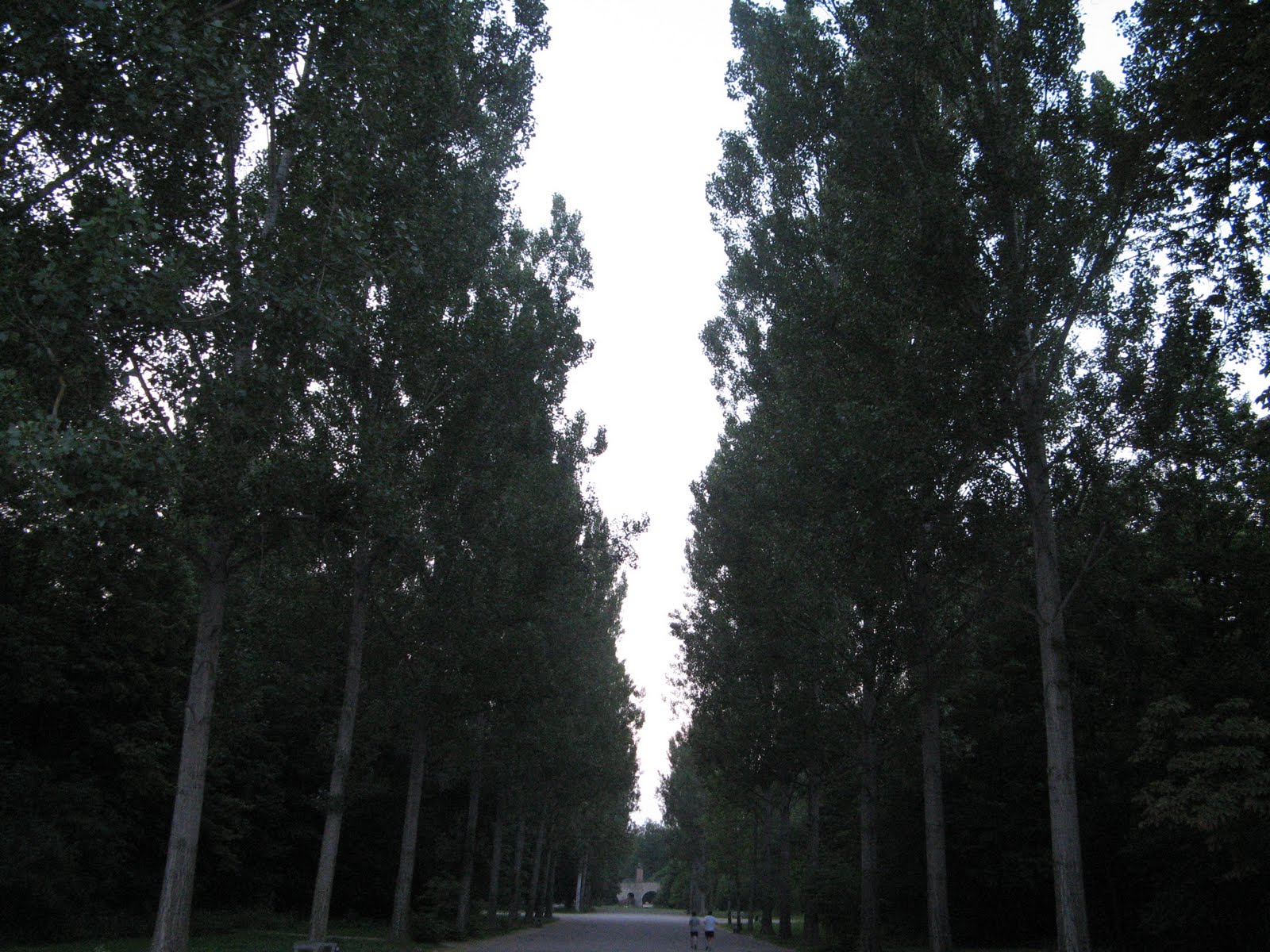


Avenue by the river Ilm: from the Park an der Ilm to the Ducal Palace
The gingko trees were planted under Goethe's direction


The home of Charlotte von Stein as seen through the trees from the entrance to the Ilm Park as Goethe must have seen it on the way to his home.


In 1786, the deep friendship between Goethe and Charlotte ended with his sudden departure to Italy without even disclosing to her his intention of leaving, his schedule or agenda. His abrupt decision, based on a longing that originated in his childhood but answering now to a need to escape Weimar incognito, revealed the end of Goethe's obsession with Frau von Stein. Not until after 1800 did their relationship begin to normalize and even then it never became as close as it was. After her husband had died in 1793 Charlotte retired from society and became more and more lonely. In 1794 she wrote the drama Dido which was a literary self-portrait. It reflected the years from 1770 to 1790 and the situation in the Court of Weimar at that time. Charlotte von Stein died on January 6, 1827 at the age of 85.


The tomb of Charlotte von Stein in Weimar


The poem Das Göttliche [Divinity] was written at the height of the relationship between Goethe and Charlotte, and reflects the classical style and the dispassionate equanimity that he began to cultivate and associate with his life at the court in Weimar. Whereas in his earlier Sturm und Drang period he had favored the reckless sentimentality and passionate extremism reflected in his Werther, the watchwords now became temperance and moderation, and the elevation of man above the passions and the natural instincts. To rise above Nature and the natural in man is the ‘divine’ element in our nature, which he celebrates in this poem.


The river Ilm at dusk


Nicholas Boyle reads this poem as follows, in his biography of Goethe (Goethe: The Poet and the Age, Volume I: The Poetry of Desire, Oxford, 1991):

“The interplay of heart and nature, that seemed so fluent and dynamic in the poems that first announced it, such as ‘May Celebration’ [Mailied] has now ceased almost entirely. ‘Divinity’ effectively retracts those poems when it tells us in 1783 that,

unfühlend
Ist die Natur.

Nature is without feeling.

and the poem’s argument is based, not on any assumption of union with Nature, but on man’s moral distinctness from her. This is not simply ‘objectivity’ – it is a betrayal of Goethe’s poetic identity forced upon him by the intellectual, social, and emotional conditions of his life over the previous seven years.” (pp. 278-79)

“The dualism implied by ‘Divinity’ – man is on the one hand an element in the material continuum of natural beings, subject to precisely the same mechanical laws as they, and on the other hand he is a free moral agent capable of doing what in natural terms is impossible – is an attitude peculiarly characteristic of the German ‘official’ Enlightenment, and we have seen its origins in Leibniz’s notion of the pre-established harmony between material and mental events. That Goethe should now be expressing it in such unadorned and commanding terms shows how far he had moved away, not only from his recent tragic fear of the power of the gods and of fate, but also from the earlier Storm and Stress awareness of the material, social, and historical determinants of human behavior, and towards the official culture of absolutist bureaucracy.” (p. 351).


DAS GÖTTLICHE (1783)

[English translation below]

"Edel sei der Mensch
Hilfreich und gut!
Denn das allein
Unterscheidet ihn
Von allen Wesen,
Die wir kennen.

Heil den unbekannten
Höhern Wesen
Die wir ahnen!
Ihnen gleiche der Mensch!
Sein Beispiel lehr uns
Jene glauben.

Denn unfühlend
Ist die Natur:
Es leuchtet die Sonne
Über Bös und Gute
Und dem Verbrecher
Glänzen wie dem Besten
der Mond und die Sterne.

Wind und Ströme,
Donner und Hagel
Rauschen ihren Weg
Und ergreifen
Vorüber eilend
Einen um den andern.

Auch so das Glück
Tappt unter die Menge,
Faßt bald des Knaben
Lockige Unschuld,
Bald auch den kahlen
Schuldigen Scheitel.

Nach ewigen, ehrnen,
Großen Gesetzen
Müssen wir alle
Unseres Daseins
Kreise vollenden.

Nur allein der Mensch
Vermag das Unmögliche:
Er unterscheidet,
Wählet und richtet;
Er kann dem Augenblick
Dauer verleihen.

Er allein darf
Den Guten lohnen,
Den Bösen strafen,
Heilen und retten,
Alles Irrende, Schweifende
Nützlich verbinden.

Und wir verehren
Die Unsterblichen,
Als wären sie Menschen,
Täten im großen,
Was der Beste im kleinen
tut oder möchte.

Der edle Mensch
Sei hilfreich und gut!
Unermüdet schaff er
Das Nützliche, Rechte,
Sei uns ein Vorbild
Jener geahneten Wesen."


DIVINITY (1783)


"Let man be noble,
Generous and good;
For that alone
Distinguishes him
From all the living
Beings we know.

Hail to the unknown
Higher beings
Of our intuition!
Let man resemble them;
Let his example
Teach us to believe in them.

For the realm of nature
Is unfeeling;
The sun sheds its light
Over evil and good
And the moon and the stars
Shine on the criminal
As on the best of us.

The wind and the rivers
The hail and the thunder
Storm on their way
And snatch one victim
After another
As they rush past.

So too does blind fortune
Grope through the crowd, now
Seizing a young boy’s
Curly-haired innocence
And now the bald pate
Of the old and guilty.

As great, everlasting,
Adamantine laws
Dictate, we must all
Complete the cycles
Of our existence.

Only mankind
Can do the impossible:
He can distinguish,
He chooses and judges,
He can give permanence
To the moment.

He alone may
Reward the good
And punish the wicked;
He may heal and save
And usefully bind
All that strays and wanders.

And we revere
The immortals, as if
They were human beings
Who do on a great scale
What little the best of us
Does or endeavors.

Let the noble man
Be generous and good,
Tirelessly achieving
What is just and useful:
Let him be a model
For those beings whom he surmises."

[Translation by David Luke]


Goethe's cottage in the Park an der Ilm


Friday, October 29, 2010

GOETHE: GANYMED (1774)


"Umfangend umfangen!"
"Embracing, embraced"
"A mí hacia mí, . . . "


Ganymede with the Eagle (Thorvaldsen)


GANYMED (1774)
[English and Spanish translation below]
[Bonus: Auden's and Rembrandt's Ganymede, below]


"Wie im Morgenglanze
Du rings mich anglühst,
Frühling, Geliebter!
Mit tausendfacher Liebeswonne
Sich an mein Herz drängt
Deiner ewigen Wärme
Heilig Gefühl,
Unendliche Schöne!

Daß ich dich fassen möcht
In diesen Arm!

Ach, an deinem Busen
Lieg ich, schmachte,
Und deine Blumen, dein Gras
Drängen sich an mein Herz.
Du kühlst den brennenden
Durst meines Busens,
Lieblicher Morgenwind!
Ruft drein die Nachtigall
Liebend nach mir aus dem Nebeltal.

Ich komm, ich komme!
Wohin? Ach, wohin?

Hinauf! Hinauf strebts.
Es schweben die Wolken
Abwärts, die Wolken
Neigen sich der sehnenden Liebe.
Mir! Mir!
In euerm Schoße
Aufwärts!
Umfangend umfangen!
Aufwärts an deinen Busen,
Alliebender Vater!"


Zeu
s abducting Ganymede (Olympia)


Ganymede


"How, in the light of morning,
Round me thou glowest,
Spring, thou beloved one!
With thousand-varying loving bliss
The sacred emotions
Born of thy warmth eternal
Press 'gainst my bosom,
Thou endlessly fair one!

Could I but hold thee clasp'd
Within mine arms!

Ah! upon thy bosom
Lay I, pining,
And then thy flowers, thy grass,
Were pressing against my heart.
Thou coolest the burning
Thirst of my bosom,
Beauteous morning breeze!
The nightingale then calls me
Sweetly from out of the misty vale.

I come, I come!
Whither? Ah, whither?

Up, up, lies my course.
While downward the clouds
Are hovering, the clouds
Are bending to meet yearning love.
For me,
Within thine arms
Upwards!
Embracing, embraced!
Upwards into thy bosom,
Oh Father all-loving!"


Ganymede and the Eagle


Ganimedes

"En tu luz matinal como me envuelves,
¡oh primavera amada!
Con todas las delicias del amor,

entra en mi pecho
tu sacro ardor de eterna llamarada;
¡oh infinita Belleza:
si pudiese estrecharte entre mis brazos!

Recostado en tu pecho languidecemi corazón; de musgos y de flores
dulcemente oprimido, desfallece.
Tú apaciguas mi sed abrasadora,
¡oh brisa matinal y acariciante!
mientras el ruiseñor enamorado me llama entre la niebla vacilante.

Ya voy, ya voy, y ¿adónde?
¡Ay! ¿Adónde? Hacia arriba, ¡siempre arriba!
Flotan, flotan las nubes o descienden
y abren paso al amor de ímpetu fiero.
A mí hacia mí, contra tu ser, ¡arriba!

¡En abrazo sin par, arriba, arriba!
Contra tu corazón, ¡oh dulce padre,
oh inmenso padre del amor fecundo!"

Traducción de Guillermo Valencia


Zeus and Ganymede (Getty)


Ganymede
(Zürich)


Ganymede, by W. H. Auden

"He looked in all His wisdom from the throne
Down on that humble boy who kept the sheep,
And sent a dove; the dove returned alone:
Youth liked the music, but soon fell asleep.

But He had planned such future for the youth:

Surely, His duty now was to compel.
For later he would come to love the truth,
And own his gratitude. His eagle fell.

It did not work. His conversation bored
The boy who yawned and whistled and made faces,
And wriggled free from f
atherly embraces;

But with the eagle he was always willing
To go where it suggested, and adored
And learnt from it so many ways of killing."


Rembrandt, The Rape of Ganymed
e (1635)


In Greek mythology, Ganymede, or Ganymedes, is a divine hero whose homeland was Troy. He was a prince, son of Tros of Dardania and Callirrhoe. He was a very attractive boy, which explains why Zeus, perhaps in the form of an eagle, abducted him and carried him off to Olympus, to become a cup-bearer to the gods, and, in Classical and Hellenistic Greece, as his eromenos, or passive sexual partner. The word “catamite,” (boy kept by a pederast) is derived from his name. Ganymede was abducted by Zeus from Mount Ida in Phrygia, where he was tending a flock of sheep. He was a growing boy, and not a querulous infant, as depicted by Rembrandt. Ganymede’s father was mollified by a gift of horses, which is mentioned in the Iliad by Diomedes, who is eager to capture them: “They are of the stock that great Jove gave to Tros in payment for his son Ganymede, and are the finest that live and move under the sun.”Plato states in his Laws that the myth of Ganymede had been invented by the Cretans to account for “pleasure against nature.” In the terracotta Late Archaic statuette at Olympia (above), Ganymede holds a cockerel in his left arm, a gift from Zeus. Zeus also gave Tros the horses, assuring the latter that the boy was now immortal and would hold a distinguished position on Olympus as cup-bearer for the gods. The theme of the father is recurrent in many of the Greek coming-of-age myths of male love, suggesting that the pederastic relationships symbolized by these stories took place under the supervision of the father.


Ganymede rolling a hoop and bearing aloft a cockerel— a love gift from Zeus, illustrated in pursuit, on obverse of vase. Attic red-figure krater, 500–490 BCE (Louvre)


Whereas Auden in his poem sets the Ganymede story within the very realistic context of the mythical event, exploring the sentiments of the boy in response to his seduction, eventual abduction, kidnap and rape, Goethe has done something totally different to the mythical persona of Ganymede. He has turned him into a mood, or an emotion, where Zeus and Ganymede become one. To identify this emotion is rather difficult. It is in some ways reminiscent of the character of Cherubino in Mozart’s Nozze di Figaro (“Parlo d’amor con me!” 'I speak of love to myself'). The embrace of Spring and of Nature would suggest libidinal arousal, a diffuse form of sexual desire, whose outcome is the rise towards the ‘Alliebender Vater,’ the All-loving Father. But is it the desire of Ganymede, or that of Zeus that is being expressed? The emotion is so diffuse that it is unclear whether the first two stanzas of the poem are “spoken” by Ganymede or by Zeus. In its conclusion, it is again unclear whether Zeus seeks to embrace Ganymede or Ganymede Zeus. Who is embraced? Who is embracing? As in the love song of Cherubino, it is a form of narcissistic love that is conveyed by this poem.
In his biography of Goethe, Nicholas Boyle remarks on this reciprocity and interdependence of feeling in the mutual self-positioning of Zeus and Ganymede that appears to surface in the poem. But rather than see it as the mirroring image of Narcissus in the reflecting pool, he regards it as a commentary on the later Romantic preoccupation with the relationship between Nature and the Soul: “Nature (whatever that may be) reaches out to embrace the soul only with the same energy, and no more, with which the soul drives itself into the arms of Nature. As Ganymede’s yearning drives him up into the heavens, so the clouds of heaven sink downwards in acknowledgment of this power of love.” Boyle rejects the notion that Zeus and Ganymed become one in the poem, which is a corollary, as he argues, of the idea that the poem is a pantheistic conception based on Goethe's reading of Spinoza. Goethe himself claims that he did not read Spinoza until the 1780's, more than a decade after he wrote Ganymed, which corroborates Boyle's assertion. (Goethe, The Poet and the Age: Volume 1 – The Poetry of Desire, [Oxford, 1991] p. 160). Rather, says Boyle, it is a Leibnitzian conception, where the individual soul, as Monad, is totally sovereign but reflects within itself the entire cosmos around it.

GOETHE: ROMAN ELEGY XI

JOHANN WOLFGANG VON GOETHE

Römische Elegien (1790-1795)


"Euch, o Grazien, legt die wenigen Blätter ein Dichter
Auf den reinen Altar . . . "


Goethe in the 1780's


Jean-Leon Gerome, The Cock Fight (1846)
Bacchus and Venus


R
ömische Elegie XI
[English and Spanish translation below]


"Euch, o Grazien, legt die wenigen Blätter ein Dichter
Auf den reinen Altar, Knospen der Rose dazu,
Und er tut es getrost. Der Künstler freuet sich seiner
Werkstatt, wenn sie um ihn immer ein Pantheon scheint.
Jupiter senket die göttliche Stirn, und Juno erhebt sie;
Phöbus schreitet hervor, schüttelt das lockige Haupt;
Trocken schaut Minerva herab und Hermes, der leichte,
Wendet zur Seite den Blick, schalkisch und zärtlich zugleich.
Aber nach Bacchus, dem weichen, dem träumenden, hebet Cythere
Blicke der süßen Begier, selbst in dem Marmor noch feucht.
Seiner Umarmung gedenket sie gern und scheinet zu fragen:
Sollte der herrliche Sohn uns an der Seite nicht stehn?"


Bacchus and Cythera (Venus)
[Rubens, oil on canvas, 1613]


Roman Elegy XI.

THESE few leaves, O ye Graces, a bard presents in your honor,
On your altar so pure, adding sweet rosebuds as well,
And he does it with hope. The artist is glad in his workshop,
When a Pantheon it seems round him forever to bring.
Jupiter knits his godlike brow,—hers, Juno uplifteth;
Phœbus strides on before, shaking his curly-lock’d head;
Calmly and dryly Minerva looks down, and Hermes, the light one,
Turneth his glances aside, roguish and tender at once.
But towards Bacchus, the yielding, the dreaming, raiseth Cythera
Looks both longing and sweet, e’en in the marble yet moist.
Of his embraces she thinks with delight, and seems to be asking:
“Should not our glorious son take up his place by our side?”


Priapus, son of Bacchus and Venus
"our glorious son"
Priapo, hijo de Baco y de Venus
"el hijo esplendido"


Elegia Romana XI

"Para ustedes, oh Gracias, un poeta coloca

algunas hojas sobre el altar puro, y capullos de rosas,

y lo hace confiado. El artista se complace

en su estudio, aunque siempre le parezca un panteón.

Júpiter baja la frente, Juno la levanta.

Febo avanza y sacude su cabeza rizada.

Adusta, observa Minerva, y Hermes, el ligero,

mira de reojo, pícaro y tierno a la vez.

Pero es hacia Baco, el blando, el soñador, hacia quien

eleva la vista Citeres con dulce deseo,

que tiembla incluso en el mármol.

Recuerda sus abrazos con gusto y parece preguntar:

"¿Por qué no está a nuestro lado el hijo espléndido?"


The three Graces (Euphrosyne, Aglealea, Thalia)
Antonio Canova (Hermitage, 1814-17)

GOETHE: ROMAN ELEGY X


JOHANN WOLFGANG VON GOETHE


Römische Elegien (1790-1795)


"Freue dich also, Lebendger, . . . "


J.H.W. Tischbein, Goethe at the window of his lodgings in Rome (1787)


Römische Elegie X
[English and Spanish translation below]


"Alexander und Cäsar und Heinrich und Friedrich, die Großen,
Gäben die Hälfte mir gern ihres erworbenen Ruhms,
Könnt ich auf eine Nacht dies Lager jedem vergönnen;
Aber die Armen, sie hält strenge des Orkus Gewalt.
Freue dich also, Lebendger, der lieberwärmeten Stätte,
Ehe den fliehenden Fuß schauerlich Lethe dir netzt."


Lethe (Forgetfulness)
Gustave Dore, Illustration for Dante's "Purgatorio"
Dante submerged in the River Lethe


Roman Elegy X


"ALEXANDER, and Cæsar, and Henry, and Frederick, the mighty,
On me would gladly bestow half of the glory they earn’d,
Could I but grant unto each one night on the couch where I’m lying;
But they, by Orcus’s night, sternly, alas! are held down.
Therefore rejoice, O thou living one, bless’d in thy love-lighted homestead,
Ere the dark Lethe’s sad wave wetteth thy fugitive foot."


Alexander, Delos (Louvre)


Elegia Romana X


"Alejandro, César, Enrique y Federico, los grandes,
me darían felices la mitad de la fama que conquistaron,
porque les cediera a cada uno una noche de mi cama.
Pero, pobres, los tiene presos el duro poder del Orco.
Regocíjate pues, tú, viviente, en el cálido sitio del amor,
antes que el lúgubre Leteo atrape tu pie fugitivo."


GOETHE: ROMAN ELEGY XII


JOHANN WOLFGANG VON GOETHE

Römische Elegien (1790-1795)


"Unsre Zufriedenheit bringt keine Gefährde der Welt."


Goethe in Rome (Tischbein, oil on canvas, 1787)


Römische Elegie XII
[English and Spanish translation below]


"Hörest du, Liebchen, das muntre Geschrei den Flaminischen Weg her?
Schnitter sind es; sie ziehn wieder nach Hause zurück,
Weit hinweg. Sie haben des Römers Ernte vollendet,
Der für Ceres den Kranz selber zu flechten verschmäht.
Keine Feste sind mehr der großen Göttin gewidmet,
Die, statt Eicheln, zur Kost goldenen Weizen verlieh.
Laß uns beide das Fest im stillen freudig begehen!
Sind zwei Liebende doch sich ein versammeltes Volk.
Hast du wohl je gehört von jener mystischen Feier,
Die von Eleusis hieher frühe dem Sieger gefolgt?
Griechen stifteten sie, und immer riefen nur Griechen,
Selbst in den Mauern Roms: »Kommt zur geheiligten Nacht!«
Fern entwich der Profane; da bebte der wartende Neuling,
Den ein weißes Gewand, Zeichen der Reinheit, umgab.
Wunderlich irrte darauf der Eingeführte durch Kreise
Seltner Gestalten; im Traum schien er zu wallen: denn hier
Wanden sich Schlangen am Boden umher, verschlossene Kästchen,
Reich mit Ähren umkränzt, trugen hier Mädchen vorbei,
Vielbedeutend gebärdeten sich die Priester und summten;
Ungeduldig und bang harrte der Lehrling auf Licht.
Erst nach mancherlei Proben und Prüfungen ward ihm enthüllet,
Was der geheiligte Kreis seltsam in Bildern verbarg.
Und was war das Geheimnis? als daß Demeter, die große,
Sich gefällig einmal auch einem Helden bequemt,
Als sie Jasion einst, dem rüstigen König der Kreter,
Ihres unsterblichen Leibs holdes Verborgne gegönnt.
Das war Kreta beglückt! das Hochzeitsbette der Göttin
Schwoll von Ähren, und reich drückte den Acker die Saat.
Aber die übrige Welt verschmachtete; denn es versäumte
Über der Liebe Genuß Ceres den schönen Beruf.
Voll Erstaunen vernahm der Eingeweihte das Märchen,
Winkte der Liebsten — Verstehst du nun, Geliebte, den Wink?
Jene buschige Myrte beschattet ein heiliges Plätzchen!
Unsre Zufriedenheit bringt keine Gefährde der Welt."


Ceres


Roman Elegy XII

"Do you hear, beloved: that shouting in the Via Flaminia?
It is the reapers, on their way back to their country and their homes
Far from here, having finished the harvest for them, for the Romans,
Who disdain to wind garlands for Ceres themselves.
Festivals now no more are devoted to her, the great goddess,
Giver of golden corn, rather than acorns, for fare.
Let the two of us honor that feast-day, rejoicing in private.
Lovers, at least to themselves, being a nation conjoined.
Have you heard, perhaps, of that mystical celebration
Which from Eleusis once followed a victor to Rome?
Hellenes founded the rite; and henceforth it has always been Hellenes,
Even in Rome, who called out: “Come into sanctified night!”
Those profane crept away: the expectant novice, though, trembled,
Wrapped in a garment whose white signified pureness unstained.
Weirdly then the initiate wandered around, within circles
Formed of strange shapes, in a dream seemed to be moving: for here
Serpents wriggled about, a procession of serious virgins
Carried caskets all locked, garnished with ears of ripe corn.
While, impatient and awed, novices waited for light.
Not before many trials and tests were they finally granted
Clues to the hallowed round’s secret and curious signs.
What did the mystery mean, then? No more than this, that Demeter,
Great though she was, did once yield to a hero’s desires,
When to Iasion long since, a vigorous king of the Cretans,
All her body’s occult, inmost delights she vouchsafed.
Overjoyed was all Crete then. The marriage bed of the goddess
Swelled with new growth, and the corn lushly weighed down all the fields,
Yet the rest of the world suffered famine; because in her transports
Ceres completely forgot cares her high calling imposed.
Full of amazement each novice heard the incredible story,
Winked at his lover. – Do you understand, beloved, that wink?
It’s a hallowed small place that bushy-leafed myrtle-tree shadows!
Our contentedness harms no one, endangers no world."


Ceres (Watteau, oil on canvas, 1712)


Elegia Romana XII


¿Escuchas, amada, la alegre gritería en la Vía Flaminia?
Son segadores, regresan al hogar lejano.
Han terminado
la cosecha del romano,
quien ya ni la propia corona
de Ceres quiere tejer;
ya no celebra fiesta alguna
en honor de la gran diosa,
ella, que por alimento,
en lugar de bellotas, concede dorado trigo.
¡Celebremos ambos la fiesta en silencioso regocijo!
Pues dos amantes son toda una multitud.
¿Has oído alguna vez de esa feria mística
que seguía
en la antigüedad al vencedor desde Eleusis?
Los griegos la fundaron, y siempre eran únicamente los griegos,
aun dentro de los muros de Roma,

quienes gritaban: "¡Vengan a la noche sagrada!"
El profano se alejaba; temblaba de expectación el neófito,
en su túnica blanca, símbolo de pureza.
Maravillado iba errante el iniciado
entre círculos
de raras figuras, le parecía deambular en sueños;
por el suelo, en torno, se arrastraban las serpientes;
las doncellas portaban cerrados cofrecillos coronados con muchas espigas.
Los sacerdotes hacían gestos
y zumbidos de muchos significados.
Impaciente
y temeroso suspiraba el neófito por la Luz.
Sólo después de muchas pruebas y exámenes
llegaba
a descifrar el significado de las pinturas extrañas en el círculo santo.
Y lo que era el secreto:

la gran Démeter, se enamoró alguna vez de un héroe.
Y le entregó a Yasión, el rey vigoroso de Creta,
la gracia oculta de su cuerpo inmortal.
¡Oh Creta
afortunada!
¡Oh, el lecho nupcial de la diosa,
rebosante de espigas!
se volvieron fértiles
los campos de la ciudad.
Pero el resto del mundo
agonizaba,
por no rendir precioso culto a la bella
y placentera Ceres.
Lleno de asombro el iniciado
escuchaba el mito
e hizo un guiño a la amada:
"¿Lo entiendes ahora?
¡Esos mirtos frondosos
ocultan un lugar sagrado!
Nuestra felicidad no le hace
ningún daño al mundo."


Via Flaminia, in an Eighteenth Century print.

Labels

Labels

Labels