Demo Site

Sunday, March 20, 2011

Music and Literature: Schumann's Papillons, Op. 2


THE ROMANTIC PROGRAM

Robert Schumann, Papillons, Op. 2 (1829-1831)


The Papillons are Schumann’s second published work, written for the piano in the course of his twentieth year, as he awakened to the life of a composer of music and abandoned his study of the Law. Yet it already contains one essential characteristic of his later work, and of the work of the Romantic composers generally, namely, its programmatic element. Papillons is undisguised programme music, based on Schumann’s reading of Jean Paul’s novel Flegeljahre (The Awkward Age) of 1805.

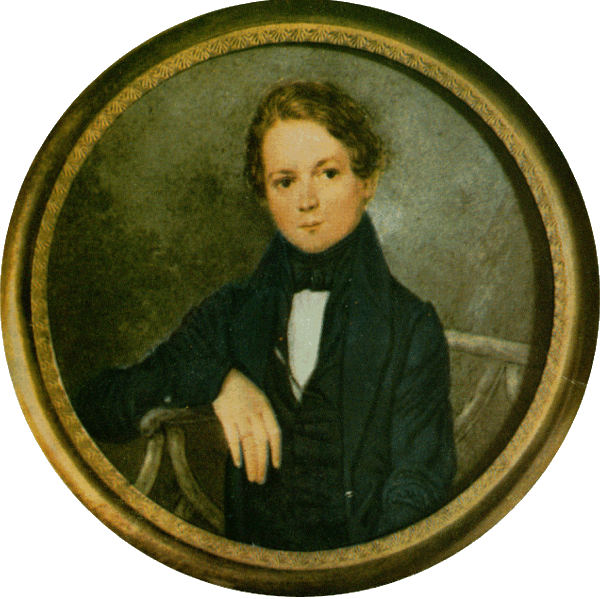
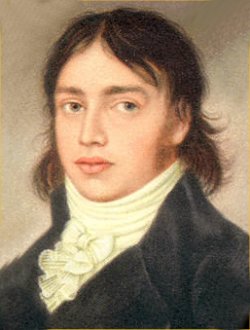
Robert Schumann at 20

In a letter to his friend, the critic Ludwig Rellstab, Schumann describes the "program" as follows:

“I feel I must add a few words about the origin of the Papillons, for the thread that is meant to bind them together is scarcely visible. You will remember the final scene of Jean Paul’s Flegeljahre: fancy dress ball – Walt – Vult – masks – Vina – Vult’s dancing – exchange of masks – confessions – rage – revelations – hurry away – concluding scene, then the departing brother. Again and again I turned over the last page, for the end seemed to me but a new beginning. . . . Almost without knowing, I found myself sitting at the piano, and one Papillon after another came into being.” (Schumann, Letter to Ludwig Rellstab, 1831)


Jean Paul (Richter) (1763-1825)


The work is dedicated to Schumann's sisters-in-law, Therese, Rosalie and Emilie, and in a joint letter to them and his brothers, he again makes reference to the literary background that inspired his creation:

“Please read the closing scene of Jean Paul’s Flegeljahre as soon as you can. Papillons is actually a setting of this carnival to music. Does it not faithfully reflect something of Vina’s angelic love, of Walt’s poetic temperament and of Vult’s sharp, brilliant nature?”

Papillons is meant to depict a ball at which the twin brothers Walt and Vult confront each other over the love of Vina. Walt is the poetic sentimentalist, a Romantic type, and Vult is a forceful realist, the intent of the respective sections of the music being in effect to portray these different personality and cultural traits by means of sound and structure. The dichotomy between dreamer and realist is also reflective of the Romantic fascination with the Doppelgänger phenomenon, the alter-ego personality conflict, and it has been often said that Walt and Vult reveal the conflicting aspects of Schumann’s own personality.


Louis-Jacques-Mandé Daguerre, Portrait of Schumann


The musical composition consists of a series of festive dance-sequences, many of them waltzes, and an attempt to depict character in music. Each one of the twelve sections originally had a title, based on the series described in Schumann’s letter to Rellstab. But Schumann removed the titles before publishing the work. The title of the completed work, 'Papillons' (Butterflies) is clearly a reference to the airiness, color, flightiness, and spontaneity of the music.


Programme music is characteristic of the Romantic style of musical composition. It is a crossing of the barriers, from one art form to another, from Music to Literature, and thus from the realm of the perceived to that of the implied. It references therefore the philosophical revolution that gave birth to Romanticism, namely, the separation of the phenomenal and the noumenal worlds which Kant had enunciated in his Critique of Pure Reason of 1781, and the subsequent idealistic attempt of Romanticism to bridge the gap. Thus, in the “programme” the abstraction of the music becomes the representation of the noumenal world of ‘things-in-themselves’ that lies beyond our world of appearances, that is, beyond the empirical world that we can grasp with our senses, and which in this instance is the literary text referenced by the music. The genre would reach its apogee in the work of Richard Strauss, and then decline in the twentieth century. It continues to have an influence on film music however, especially when the score draws upon late nineteenth century musical ideas.


Nimrod David Pfeffer playing Schumann's Papillons Op.2


Part I


Part II


Wilhelm Kempff playing Schumann's Papillons Op.2


Part I


Part II


Robert Schumann (1810-1856)


Friday, March 11, 2011

Coleridge: "Constancy of an Ideal Object"


Coleridge in Rome (1806)


Coleridge on Idealized Love


In his biography of Coleridge, Richard Holmes addresses the matter of Coleridge's idealized image of the beloved, “ . . . what Coleridge himself came to see as the profound philosophic problem posed by the nature of human love itself; and by extension, of all intensely subjective experience. Was love a self-created, self-referring illusion? Or was it “some dear embodied Good?” Was [the beloved] in the end nothing more than “a fanciful dream,” or . . . genuinely a projection of his own best self, his conscience, his sense of beauty and power and hope?

This was the problem he faced again and again in his Notebooks in the succeeding months and years, and gradually in the slow accretions of his Confessional Poems, like “Constancy to an Ideal Object.” This was the questioning poem he had begun in Malta, . . . .” Richard Holmes, Coleridge: Darker Reflections, 1804-1834, (Pantheon, New York, 1998) at p. 196.


CONSTANCY TO AN IDEAL OBJECT

Since all that beat about in Nature's range,
Or veer or vanish; why should'st thou remain
The only constant in a world of change,
O yearning Thought! that liv'st but in the brain?
Call to the Hours, that in the distance play,
The faery people of the future day -- --
Fond Thought! not one of all that shining swarm
Will breathe on thee with life-enkindling breath,
Till when, like strangers shelt'ring from a storm,
Hope and Despair meet in the porch of Death!
Yet still thou haunt'st me; and though well I see,
She is not thou, and only thou art she,
Still, still as though some dear embodied Good,
Some living Love before my eyes there stood
With answering look a ready ear to lend,
I mourn to thee and say –‘Ah! loveliest friend!
That this the meed of all my toils might be,
To have a home, an English home, and thee!’
Vain repetition! Home and Thou are one.
The peacefull'st cot, the moon shall shine upon,
Lulled by the Thrush and wakened by the Lark,
Without thee were but a becalméd Bark,
Whose Helmsman on an ocean waste and wide
Sits mute and pale his mouldering helm beside.

And art thou nothing? Such thou art, as when
The woodman winding westward up the glen
At wintry dawn, where o'er the sheep-track's maze
The viewless snow-mist weaves a glist'ning haze,
Sees full before him, gliding without tread,
An image¹ with a glory round its head;
The enamoured rustic worships its fair hues,
Nor knows he makes the shadow, he pursues!

[Date uncertain²]

¹ This phenomenon, which the Author has himself experienced, and of which the reader may find a description in one of the earlier volumes of the Manchester Philosophical Transactions, is applied figuratively in the following passage of the Aids to Reflection: --
‘Pindar’s fine remark respecting the different effects of Music, on different characters, holds equally true of Genius – as many as are not delighted by it are disturbed, perplexed, irritated. The beholder either recognizes it as a projected form of his own Being, that moves before him with a Glory round its head, or recoils from it as a Spectre.’ - Aids to Reflection [1825], p. 220. [S.T.C.]

² ‘. . . those lines which a long time ago I sent to Mrs. Green.’ [S.T.C., Letter, 11 June 1835.]


From Coleridge's Letter to Henry Crabb Robinson (1811):

“In short, I believe that Love . . . is always the abrupt creation of a moment – tho’ years of Dawning may have preceded. I said Dawning – for often as I have watched the Sun-rising, from the thinning, diluting Blue to the Whitening, to the fawn-coloured, the pink, the crimson, the glory, yet still the Sun itself has always started up, out of the Horizon – ! between the brightest Hues of the Dawn and the first Rim of the Sun itself there is a chasm – all before were Differences of Degrees, passing & dissolving into each other – but this is a difference of Kind – a chasm of Kind in a continuity of Time. – And as no man who has never watched for the rise of the Sun could understand what I mean, so can no man who has not been in Love, understand what Love is – tho’ he will be sure to imagine & believe, that he does.” [emphasis in original] (Collected Letters of Samuel Taylor Coleridge, 6 vols., edited by E.L. Griggs, Oxford, 1956-71.) Vol. 3, pp. 304-5.

The 'Eros' of Centocelle


Sunday, March 6, 2011

The Romantic virtuoso form: Chamber Music

Mendelssohn, Piano Trio in D Minor

Artur Rubinstein, Piano
Jascha Heifetz, Violin
Grigor Piatigorsky, Cello

The Romantic virtuoso form: Sarah Chang and Felix Mendelssohn

Mendelssohn, Concerto in E Minor
Sarah Chang, Violin
Kurt Masur and the New York Philharmonic

Third Movement Finale


Felix Mendelssohn (1809 – 1847)


UNDINE


Undine
is a short Romantic novel written in the first decade of the nineteenth century by the German author Friedrich Heinrich Karl de la Motte, Baron Fouqué (1777 – 1843), and it is a wonderful work to illustrate the manner in which the Romantics attempted to breach the dualism implicit in the Kantian philosophy.


Friedrich Heinrich Karl de la Motte, Baron Fouqué


De la Motte, Baron Fouqué, was born in Brandenburg and der Havel in 1777. He was descended from French Huguenot immigrants to Prussia. His grandfather was one of Frederick II’s generals and his father was also a Prussian officer. De la Motte himself gave up university study at Halle in order to join the army and joined in the Rhine campaign against the French revolutionary armies in 1794. Thereafter, he dedicated himself to literary pursuits.

De la Motte was influenced by the German Romantics, particularly August Wilhelm Schlegel. His work is very much within the tradition of this style, of which he is one of its most accomplished representatives. The short novel Undine is his best known work, but he was also the first to dramatize the legend of the Nibelungs, in 1808, which would have a distinguished history culminating in Wagner’s work. Undine appeared in 1811, and De la Motte’s popularity peaked during the years of the Napoleonic Wars, and then began to wane after 1815.


De la Motte Fouqué


It is said that after 1820 the quality of De la Motte Fouqué's work deteriorated, but this could be due to the fact that the exalted Romantic style associated with his work itself began to lose favor and became less popular after the war. His work seemed evenly divided between a preoccupation with medieval chivalry on the one hand and northern mythology on the other. When the Prussians rose against Napoleon in 1813, De la Motte fought with the Prussian army in the war of the sixth coalition, and his work thereafter had the flavor of the new patriotism, which dimmed after the war was over. Romanticism would begin to move on to the revolutionary concerns of authors like Georg Büchner.


Romanticism and Kantian dualism

Kant’s Critique of Pure Reason laid strict rules to limit transcendent inquiry beyond what we can know through sensual perception and understanding. He set the rules delimiting the power of our mental capacity in his quest to answer the question “what can I know?” Anything that could not be subordinated to the table of the Categories of the Understanding was beyond our ability to know. But in the later sections of the First Critique, he admitted that the noumenon, the thing in itself which causes our sensations but is unknowable in itself, had a heuristic or regulative function in relation to the understanding. The noumenon, he argued, is knowable by Reason. It is the Idea behind and beyond the phenomenon, the latter being known only through empirical sensation and understanding. In moving from the epistemological to the ethical and aesthetic concerns of the Second and Third Critiques, the function of the Ideas known to Reason grew in importance, to the point at which they operated as if constitutive, in the case of the moral imperative and of the aesthetic judgment. The self-enclosure of Kant’s system seemed to open up as both moral behavior and art offered access to the noumenal realm.


Immanuel Kant (1724-1804)


Coleridge, who learned his Idealism during the trip he made to Germany in 1799, believed that the sharp demarcation between phenomena and noumena in Kant's First Critique was a compromise due to political conditions in Prussia. “I could not believe,” wrote Coleridge in the Biographia, “it was possible for him to have meant no more by his Noumenon, or THING IN ITSELF, than his mere words express: or that in his own conception he confined the whole plastic power to the forms of the intellect, leaving for the external cause, the materiale of our sensations, a matter without form.” (Biographia Literaria, I, 155). For Coleridge, it was the limits that Kant had placed upon scientific endeavors to penetrate the metaphysical sphere that constituted the highest value of Kant’s work. Coleridge argued in favor of a form of direct knowledge of the noumenal realm which was the basis of a richer human experience than any which Science could provide. It was the direct access that the imagination of the poet and of the artist had to the essence of the world of Nature, and the direct access of the good man to the knowledge of his duty. As well, he believed this was the actual purport of Kant’s own statement in the 1787 Preface to the Critique of Pure Reason: “I have . . . found it necessary to deny knowledge, in order to make room for faith. The dogmatism of metaphysics, that is, the preconception that it is possible to make headway in metaphysics without a previous criticism of pure reason is the source of all that unbelief, always very dogmatic, which wars against morality.”


Johann Gottlieb Fichte (1762-1814)


The Idealists sought to move beyond what they saw as Kant’s compromise between a strictly phenomenal world of sensible objects and a strictly noumenal world of absolute Ideas, and to make the Absolute apply to the here and now of every-day existence. They sought to incorporate the noumenon into the dialectical structure of their philosophical systems. Hence they attacked Kant as a dualist. Fichte argued that the thing-in-itself could not possibly be the “cause” of our experience because causality fell within the categories of the understanding by Kant’s own criterion. How could causality condition the unconditioned? The argument that the noumenon is the cause of experience is an unwarranted application of a category of the understanding to a non-empirical object.

The Idealists would replace the unconditioned noumenal realm by Self-Consciousness, a “subject which becomes its own object.” Self-Consciousness has the unconditioned power of a ‘substantial ego’ affording it immediate knowledge of its own ground. The gap between the noumenal and the phenomenal, they argued, could thus be bridged.


Friedrich Wilhelm Schelling (1775-1854)


This was the environment wherein German Romanticism grew apace. What appealed to the Romantics about the self-consciousness systems of the Idealists, particularly that of Schelling, is that it argued that the knowledge of self endows man with insight into the rationality and purposiveness of the whole natural universe. For Schelling the identification of mind and nature is based upon a form of intuitive knowledge, a gnosis (a Greek word that means 'knowledge'), which affords an immediate and direct comprehension unlocking the secrets of Nature. He was inspired by myth, which does not distinguish between a symbolic and a rational experience of reality. Goethe had already said that the universal shimmers through the particular. For Schelling the ‘shimmering’ was the gnosis. Not limited to empirical inquiry and barred from the knowledge of the noumenon, the creative mind of the poet is provided with an immediate insight into the transcendental powers which, in turn, construct the ultimate phenomenon experienced by the senses. The re-creation of an alien experience, the experience of a truth that transcends the sphere of the control of scientific method, was possible through a self-consciousness that culminated in the work of art.

This is the ground of the work of art of the Romantic period which seeks to transcend the real and empirical and penetrate the mystery of the unknown, the equivalent of the philosophical noumenon. Such is the background of the great poems of Coleridge, ‘The Ancient Mariner’ and ‘Kubla Khan,’ as well as of the fairy tales of the German Romantics.

In his book on German Romanticism, (German Romanticism and Its Institutions, Princeton, 1990), Theodore Ziolkowski remarks on three facets of the Romantic image that characterized the work of three prominent German Romantics: “Eichendorff was fascinated by the ambivalence of a nature at once serene and threatening and by the tension between the security of home and the demonic lure of the unfamiliar. Novalis was philosophically and scientifically convinced that death represented an extension of life, and he saw that tranquil death reflected in the nocturnal side of nature that he portrayed so vividly in his writings. And Hoffmann, like the characters of his fiction, sometimes teetered precariously on the line between reality and imagination, between bourgeois sobriety and the poet’s frenzy.” (pp. 3-4) These three facets correspond to the two realms that Romanticism intended to breach, the realm of the supernatural or fantastic and the realm of the empirical phenomenon, of every-day reality. The security of home and the lure of the unfamiliar, the objects of reality and the objects of the imagination, the natural and the supernatural, these are the polarities that Romanticism sought to overcome. It was the dualism implicit in the Kantian critique that Kant himself had sought to bridge by way of the Categorical Imperative and the Aesthetic Judgment of Taste. The Romantics now sought to use these tools to bring the strange and unfamiliar, the supernatural, into the life of the real.


Jose Antonio Villarrubia (b. 1961), Undine, (n.d.)


UNDINE (1811)

[click on images to make them larger]

The story of Undine is all about elemental forces of Nature engaging with human beings. The water-spirits that are the main protagonists of the story, Undine and her “uncle” Kühleborn, are agents without cause, forces that are perceived to operate, but do so beyond the law of causality that governs the phenomenal world.

A spirit of the rivers and of water has exchanged a human little girl, the daughter of a fisherman, for an underwater sprite named Undine. As the story begins, the fisherman and his wife have lost their daughter, who has drowned. Shortly thereafter, Undine appears on their doorstep, a beautiful little girl, presumably of the same age. The fisherman and his wife do not know that Undine is a “spirit,” and they adopt her. She grows up to be a lovely and spirited young maiden in their home, which is located in a peninsula that projects onto a lake. As she grows older, the maiden becomes increasingly more beautiful, but occasionally spiteful and unruly. One day a knight appears at the fisherman’s home. He has braved the forest, where he experienced various haunting encounters with spirits, and was compelled towards the peninsula where the fisherman’s house is located. The knight, Huldbrand von Ringstetten, falls in love with Undine. Undine then tells Huldbrand that she is a mermaid, that she has no soul, and that she has been placed on earth because she wants to marry a human being in order to thereby acquire a soul.


Arthur Rackham, Undine


Huldbrand and Undine marry, but during the wedding ceremony he meets once again with Bertalda, a woman he had been attracted to before his trip into the forest. Bertalda is jealous of Undine, and seeks to undo the bond between the young married couple. Undine notices this and decides to befriend Bertalda.


Arthur Rackham, Bertalda


Undine, as a gesture of friendship towards Bertalda, and wanting to make up for Bertalda’s disappointment, reveals to her guests that Bertalda is the long-lost daughter of the fisherman and his wife, whom she has invited to be present at the announcement. Horrified by this revelation, which threatens her social status, Bertalda denies it, and heaves insults at the fisherman and his wife who are present, and turns her back on them. Her behavior causes her to be outcast, and to make amends for this unintended grievance towards her, Undine invites Bertalda to come and live with her and Huldbrand at the castle in Ringstetten.


Jules Lefebvre (1836-1911), Undine, 1882


Life in the castle is not easy for Undine, nor is her marriage. Huldbrand’s desire for Bertalda begins to surface and deepen, and he begins to tire of Undine. Undine orders a certain spring of water sealed. It is the conduit through which her “uncle” Kühleborn comes to spy on her life and to do ill to the humans around her. Kühleborn mistrusts both Huldbrand and Bertalda, and acts to protect Undine. But Undine does not want him around, and believes that Huldbrand will be loyal to her if she acts like a human being. The spring is sealed, but Bertalda, who relies on the water for her skin care, is offended and leaves the castle in a rage into the night. A harrowing rescue follows, where Huldbrand and Bertalda are almost drowned by Kühleborn, but they return safely due to Undine’s intervention and some sort of normalcy returns to the castle.


Chauncey B. Ives, Undine, 1884


When the three protagonists decide to take a trip down the Danube together to visit Vienna, the denoument of the story begins. The tricks of Kühleborn, who rules the Danube and constantly creates difficulties for the travelers, increasingly irritate Huldbrand to the point where he becomes angry with Undine and berates her for not being a human being. His anger and contempt are too much for Undine. The magic is broken and, forlorn, she plunges into the Danube and vanishes beneath the waves.


Arthur Rackham, Undine sinking into the Danube


A desperate Huldbrand returns to his castle full of pain and regret, sobbing for the dead Undine. But Undine is not dead. She lives under the waters of the Mediterranean Sea. When Huldbrand finally decides to marry Bertalda, the spirits condemn him to die for his unfaithfulness. He is warned in a dream, but proceeds with his wedding plans. On the wedding night, Bertalda notices a blemish on her skin and orders her servants to unseal the spring and bring her some of its waters. Through the spring, Undine returns and suffocates Huldbrand with tears and watery kisses. She is present at the funeral, uninvited, but Bertalda appears to forgive her, and Huldbrand’s tomb is surrounded by the waters of Undine.


Margarita Dusjen, Undine, 2004


What are we to make of this story? The spirits have no soul, but desire one. Undine is prepared to forego her magical powers, which defy the laws of causation, for the sake of obtaining a human soul. As pure Nature, she is a creature of causality, but in contrast to the humans around her she is not so, because she originates beyond the phenomenal world. Yet she seeks to possess a human soul, which is a metaphor for free will, and thus to raise herself above the world of phenomena, which is the Natural world of the elements. This is accomplished by love. It is her love for Huldbrand that makes Undine human, temporarily, and his eventual rejection of her love leads her back to her element.

The free passage from the phenomenal to the supernatural realm is characteristic of Romanticism, and it is a way of bridging the gap rather than highlighting it. Again Ziolkowski: “. . . it was one of the principal aims of that generation to overcome the split between mind and matter, rationalism and sentimentalism, reason and emotion, which characterized the eighteenth century. Romanticism discovered history precisely because, in that temporal dimension, the kind of change, development, and synthesis could take place that was exemplified by Fichte’s “productive imagination” and the energy of Hegel’s dialectics.” (German Romanticism, p. 5)


John Waterhouse, Undine, 1872


Friday, March 4, 2011

COLERIDGE - KUBLA KHAN


Coleridge in 1798


Much has been written about Coleridge's magnificent poem of 1797, and I am very wary to add more to such a mountain of words that will never do justice to the work, since it is the emotion in the reading or in the listening to its recital that speaks volumes more than any re-wordings.


But I am compelled to add a brief comment, for how can one stay silent before this monument? The poem is clearly divided in two parts. The second part begins with the line “A damsel with a dulcimer / In a vision once I saw . . .” The first part is a report of preternatural events, a story about a wondrous place and the fabled creations of a remote man, the kind of report that Coleridge himself was reading in Purcha’s Pilgrimage when he fell asleep in that famous farm-house that lay somewhere between Porlock and Linton. (See the 1816 Preface, below).


 The second part culminates in the vision of what the poet himself would create, - another Xanadu, greater than the first, - if he could revive within his soul the deep delight which the "symphony and song” of the Abyssinian maid had once caused in his imagination, fed on honey-dew and drunk with the milk of Paradise. It is a parable about creativity and about the power of the Imagination, which he would later articulate in the famous Chapter 13 of his Biographia Literaria. The origins of creativity, the “esemplastic Power” (Coleridge's own phrase: the power to mold things into one, from the Greek eis en plattein, "to shape into one," from hen “one,” and plastikos "able to be molded, pertaining to molding," from plastos "molded," from plassein "to mold"), - this power of the creative genius, argued Coleridge, comes from within, from the imagination and not from external causes. This is where he differed most fundamentally from the thought of Wordsworth. In his much later poem (1802) Dejection: An Ode, Coleridge states this most clearly:


My genial spirits fail;
And what can these avail
To lift the smothering weight from off my breast?
It were a vain endeavour,
Though I should gaze for ever
On that green light that lingers in the west:
I may not hope from outward forms to win
The passion and the life, whose fountains are within.

[emphasis added]


KUBLA KHAN


In Xanadu did Kubla Khan
A stately pleasure-dome decree:
Where Alph, the sacred river, ran
Through caverns measureless to man
Down to a sunless sea.
So twice five miles of fertile ground
With walls and towers were girdled round:
And here were gardens bright with sinuous rills,
Where blossomed many an incense-bearing tree;
And here were forests ancient as the hills,
Enfolding sunny spots of greenery.

But oh! that deep romantic chasm which slanted
Down the green hill athwart a cedarn cover!
A savage place! as holy and enchanted
As e'er beneath a waning moon was haunted
By woman wailing for her demon-lover!
And from this chasm, with ceaseless turmoil seething,
As if this earth in fast thick pants were breathing,
A mighty fountain momently was forced:
Amid whose swift half-intermitted burst
Huge fragments vaulted like rebounding hail,
Or chaffy grain beneath the thresher's flail:
And 'mid these dancing rocks at once and ever
It flung up momently the sacred river.
Five miles meandering with a mazy motion
Through wood and dale the sacred river ran,
Then reached the caverns measureless to man,
And sank in tumult to a lifeless ocean:
And 'mid this tumult Kubla heard from far
Ancestral voices prophesying war!

The shadow of the dome of pleasure
Floated midway on the waves;
Where was heard the mingled measure
From the fountain and the caves.
It was a miracle of rare device,
A sunny pleasure-dome with caves of ice!

A damsel with a dulcimer
In a vision once I saw:
It was an Abyssinian maid,
And on her dulcimer she played,
Singing of Mount Abora.
Could I revive within me
Her symphony and song,
To such a deep delight 'twould win me
That with music loud and long
I would build that dome in air,
That sunny dome! those caves of ice!
And all who heard should see them there,
And all should cry, Beware! Beware!
His flashing eyes, his floating hair!
Weave a circle round him thrice,
And close your eyes with holy dread,
For he on honey-dew hath fed
And drunk the milk of Paradise.


Preface of 1816

Kubla Khan was published in 1816, with the following


Author's Preface:

"In the summer of the year 1797, the Author, then in ill health, had retired to a lonely farm-house between Porlock and Linton, on the Exmoor confines of Somerset and Devonshire. In consequence of a slight indisposition, an anodyne had been prescribed, from the effects of which he fell asleep in his chair at the moment that he was reading the following sentence, or words of the same substance, in Purcha's Pilgrimage: 'Here the Khan Kubla commanded a palace to be built, and a stately garden thereunto. And thus ten miles of fertile ground were inclosed with a wall.' The author continued for about three hours in a profound sleep, at least of the external senses, during which time he has the most vivid confidence that he could not have composed less than from two to three hundred lines; if that indeed can be called composition in which all the images rose up before him as things, with a parallel production of the correspondent expressions, without any sensation or consciousness of effort. On awaking he appeared to himself to have a distinct recollection of the whole, and taking his pen, ink, and paper, instantly and eagerly wrote down the lines that are here preserved. At this moment he was unfortunately called out by a person on business from Porlock, and detained by him above an hour, and on his return to his room, found, to his no small surprise and mortification, that though he still retained some vague and dim recollection of the general purport of the vision, yet, with the exception of some eight or ten scattered lines and images, all the rest had passed away like the images on the surface of a stream into which a stone has been cast, but, alas! without the after restoration of the latter! . . .

Yet from the still surviving recollections in his mind, the Author has frequently purposed to finish for himself what had been originally, as it were, given to him . . . but the tomorrow is yet to come.

Note: This fragment with a good deal more, not recoverable, composed, in a sort of Reverie brought on by two grains of Opium taken to check a dysentery, at a Farm House between Porlock & Linton, a quarter of a mile from Culbone Church, in the fall of the year 1797."


Samuel Taylor Coleridge (1772-1834)


Thursday, March 3, 2011

TRAVEL DIARIES: BISHOP BERNWARD'S HILDESHEIM - IV

TRAVEL DIARIES: HILDESHEIM – PART IV

Thursday, July 8, 2010


BISHOP BERNWARD AND THE OTTONIAN ROMANESQUE


Hildesheim

[This section follows from Part III, below]


BISHOP BERNWARD AND THE ROMANESQUE TREASURES AT HILDESHEIM

On July 8, 2010, I traveled to Hildesheim, a city located west of the Elbe River, in Lower Saxony, in the district of the same name, about 40 km southeast of Hannover. I was there to visit the Church of St. Michael’s, one of Bishop Bernwald’s cathedrals. Within this Church, among other outstanding materials of Romanesque Art, is the black column of Bishop Bernward, a bronze column depicting scenes from the life of Jesus, which I described in Part III of this blog entry. Nearby, at the Römer und Pelizaeus Museum Hildesheim, are the Bernward Doors, also in bronze, which are one of the most outstanding achievements of Ottonian Romanesque Art, and the style of which replicates the craftsmanship and the spiritual gravity of the black column discussed in Part III. [See Part III below]


THE “BERNWARD DOOR” [BERNWARDS TÜR] THE BRONZE DOORS OF ST. MARY’S CATHEDRAL, HILDESHEIM

[click on images to expand their size]


Bernward’s Door at Hildesheim Cathedral of St. Mary’s


[For a series of complete photographs of the doors, see the following blog site: http://art.uga.edu/courses/arhi2100/slides/week4/st_michael.html]

The richly sculptured doors closing the western portal of the Hildesheim Cathedral are now at the Römer und Pelizaeus Museum Hildesheim. Their importance to Bishop Bernward, who commissioned them, is probably due to the fact that he intended them to be meant for the two entrances leading from the transept to the ambulatory surrounding the crypt of the Church of St Michael’s, where he planned to be buried. The doors were finished in 1015, the year the crypt was consecrated. He probably got the idea from Byzantine and Roman bronze doors he saw during his visit to Rome. But the doors are different from their predecessors in that they are divided into horizontal fields rather than vertical panels. The sectional frame system, with its division into four equally sized compartments, was possibly made after the example of the bronze doors of the Cathedral at Mainz. Each horizontal field contains a biblical scene in high relief from the Old and New Testament. The images from the Old Testament on the left wing, read from top to bottom, beginning with the Creation of Man and ending with the Fratricide. Below is a detail of the panel depicting the Creation of Eve:


The Creation of Eve


The doors also differ from anything Bernward may have seen in Rome due to the style in which the Biblical personages were depicted by the artists he commissioned. Once again, as in the Bernward column, we see the stark realism and expressionism of German Ottonian Art, with its tortured representations of both human beings, plants, animals and decorative motifs, starkly and startingly depicting the emotional content of the vision rather than attempting a naturalistic imitation of reality. This is clearly the case in the famous panel which shows the expulsion from the Garden of Eden. H. W. Janson describes the panel as follows:


The expulsion from the garden


“[The panel] shows Adam and Eve after the Fall. Below it, in inlaid letters remarkable for their classical Roman character, is part of the dedicatory inscription, with the date and Bernward’s name. . . . The entire composition must have been derived from an illuminated manuscript; the oddly stylized bits of vegetation have a good deal of the twisting, turning movement we recall from Irish miniatures [specifically the Lindau Gospels]. Yet the story is conveyed with splendid directness and expressive force. The accusing finger of the Lord, seen against a great void of blank surface, is the focal point of the drama; it points to a cringing Adam, who passes the blame to his mate, while she, in turn, passes it to the serpent at her feet.” (H.W. Janson, History of Art, New York, 1971, 207).

At the bottom of the left wing is the depiction of the fratricide:


Cain and Abel (Genesis, 4)

The right wing of the set of doors constitutes a response to the left wing depiction of Old Testament images read from top to bottom, by contrasting it with a set of fields which depict scenes from the New Testament and convey the eye of the beholder upwards towards Heaven and Redemption, instead. The positioning of Eve and Mary on opposite sides underlines the topical structure of Guilt and Redemption, which dominates the imagery on the door. Read from bottom to top, the right wing begins with the Annunciation on the bottom, whereas the topmost image depicts the risen Christ, who, like a "new Adam" has atoned for the guilt of Man and overcome Death.


The Empty Tomb: The visit to the Sepulchre of Jesus (Mark, 16, 1-8)


Christ before Pilate (John, 18, 28-38)

The Bernward doors are the door to Heaven. The Ottonian artist, or artists, have created a gate that leads to the salvation of Mankind, which lies behind and beyond it. As the faithful reaches and faces the door, he sees the Fall of Man on his left, from the Creation on the top to the war between brothers on the bottom. To his right, however, she sees the hope of Mankind in the story of Jesus, beginning at the bottom with the Annunciation and rising, through the depiction of the sad story of Jesus, to the Resurrection above.


THE TOMB OF BISHOP BERNWALD AT ST. MICHAEL’S CHURCH

The bronze doors are said to have been designed by Bernward himself for the entrance to his tomb. The tomb of Bernward, as planned, is in the crypt (Krypta) of the Church of St. Michael’s. The western choir (shown on the left of the reconstructed plan below) has a raised floor above the level of the rest of the church, so as to accommodate a half-subterranean basement chapel, or crypt, apparently a special sanctuary of St Michael, now the Bishop’s Tomb, which could be entered both from the transept and from the west. The crypt was roofed by groined vaults resting on two rows of columns, and its walls were pierced by arched openings that linked it with the U-shaped corridor, or ambulatory, wrapped around it. The bronze doors described above, were most likely designed to guard the entry from the transept to the ambulatory.


Choir screen above the crypt


The tomb of Bishop Bernward seen from the ambulatory


View of the crypt with the tomb of Bishop Bernward in the foreground


The mosaic in the background of the crypt was added in the nineteenth century. It has a Wilhelminian look to it, like the mosaics in the great Dom of Berlin.


Modern statue of Bishop Bernward

Labels

Labels

Labels